29 July 2026 | News
Good dental care in Australia is not just about fixing a sore tooth. It is about knowing how the system works, building sensible daily habits, understanding when to seek help, and choosing a dentist who can explain your options clearly.
For people in East Melbourne and nearby suburbs, this guide gives you a practical overview of routine care, children’s dentistry, dental emergencies, costs, and cosmetic or restorative treatment planning, without the jargon.
How dental care works in Australia
Most dental care in Australia is provided through private dental practices. This means adults usually pay for dental treatment directly, sometimes with help from private health insurance extras cover. Unlike many medical services, routine adult dental check-ups, cleans, fillings, crowns and cosmetic treatments are generally not covered by Medicare.
There are exceptions and support pathways. Public dental services are available through state and territory systems for eligible people, although availability and waiting times vary. The Australian Government’s healthdirect dental care guide is a useful starting point if you are unsure whether you may be eligible for public services or need urgent advice.
Children may also be eligible for the Child Dental Benefits Schedule, known as CDBS, which helps cover certain basic dental services for eligible children. Eligibility, benefit limits and covered services can change, so it is worth checking the current details with Services Australia before booking.
| Dental care pathway | Who it may suit | What to check first |
|---|---|---|
| Private dental clinic | Adults, families, cosmetic care, restorative care, urgent appointments | Fees, treatment options, private health cover, appointment availability |
| Public dental service | Eligible concession card holders and some priority groups | Eligibility rules in your state or territory and waiting times |
| Child Dental Benefits Schedule | Eligible children aged 0 to 17 | Current eligibility, benefit cap and covered services |
| DVA dental care | Eligible Department of Veterans’ Affairs card holders | Card type, referral needs and covered treatment |
| Private health extras | People with dental extras cover | Annual limits, waiting periods, item numbers and rebates |
The everyday habits that matter most
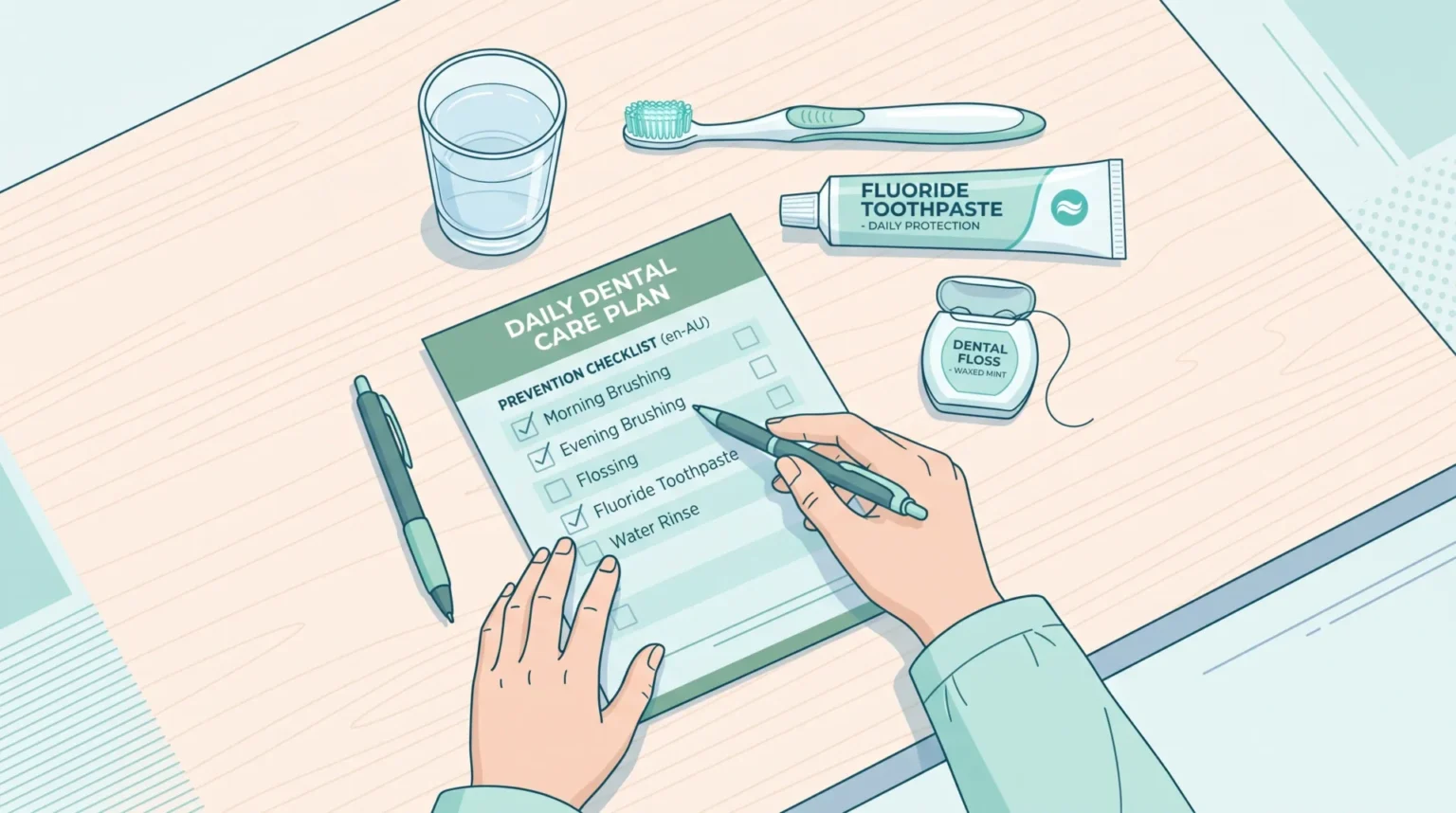
The basics still do most of the heavy lifting. Brushing twice a day with fluoride toothpaste, cleaning between the teeth, drinking water, limiting frequent sugar exposure and attending regular dental check-ups can reduce the risk of tooth decay and gum disease.
The Australian Dental Association’s consumer resource, Teeth.org.au, recommends simple preventive habits such as brushing twice daily and cleaning between teeth. These habits sound ordinary, but they are especially important because early decay and gum inflammation often develop without obvious pain.
Diet also matters. It is not only how much sugar you consume, but how often your teeth are exposed to it. Sipping soft drink, juice, sports drinks or sweetened coffee over several hours gives mouth bacteria repeated fuel to produce acid. For families, reducing sugary drinks is one of the most practical changes you can make, particularly for children.
Regular professional care supports what you do at home. A check-up can identify early decay, gum concerns, enamel wear, cracks, old filling issues and oral soft tissue changes. A scale and clean can remove hardened plaque that brushing cannot shift. If gum health is a concern, hygienist appointments can play an important role in prevention.
| Habit | Practical target | Why it helps |
|---|---|---|
| Brush with fluoride toothpaste | Twice daily | Helps remove plaque and strengthen enamel |
| Clean between teeth | Once daily, using floss or interdental brushes | Reaches areas a toothbrush cannot clean well |
| Drink tap water where available | As your main drink | Helps rinse the mouth and may provide fluoride in many Australian areas |
| Limit frequent sugary snacks and drinks | Keep sweet foods and drinks occasional | Reduces repeated acid attacks on enamel |
| Book routine dental visits | As advised by your dentist | Allows early detection and personalised prevention |
When to book a dental appointment
Pain is not the only reason to see a dentist. Bleeding gums, persistent bad breath, sensitivity, jaw discomfort, chipped teeth, loose fillings, mouth ulcers that do not heal, or changes in your bite are all worth checking. Many dental problems are easier to manage when they are found early.
For routine concerns, booking a check-up is usually appropriate. For severe pain, swelling, trauma, a knocked-out adult tooth, uncontrolled bleeding or signs of infection, call a dental clinic promptly. If you are unsure whether your situation is urgent, it is safer to ask. East Melbourne Dental Group has a helpful overview of what may count as a dental emergency.
| Symptom or situation | Suggested action |
|---|---|
| Mild sensitivity that comes and goes | Book a routine dental check-up |
| Bleeding gums when brushing or flossing | Arrange an examination and gum assessment |
| Broken filling, cracked tooth or lost crown | Contact a dentist soon, even if it is not painful |
| Severe toothache or facial swelling | Call a dentist urgently |
| Knocked-out adult tooth | Seek urgent dental care immediately |
| Mouth ulcer lasting more than two weeks | Book an assessment |
Dental care for children and families
Children benefit from dental care early, before problems become painful. Many Australian dental organisations suggest arranging a first dental visit when a child’s first tooth appears or by around their first birthday. Early visits are not just about checking teeth. They help parents understand brushing, fluoride toothpaste, thumb sucking, dummies, diet and what to expect as teeth erupt.
A child’s dental visit should feel calm and age-appropriate. The goal is to build familiarity, confidence and healthy habits. If a child is nervous, tell the dental team before the appointment so they can take a gentle, gradual approach.
For school-aged children and teenagers, regular dental visits can help identify decay risk, enamel defects, crowding, sports-related injury risk, wisdom tooth development and oral hygiene challenges around braces or aligners. If your child plays contact sport, ask about a custom mouthguard.
If you may be eligible for CDBS, confirm the details before treatment. Not every service is included, and limits apply, but it can be a valuable support for basic dental care.
Cosmetic and restorative dentistry: start with oral health
Cosmetic dentistry is popular in Australia, especially treatments such as teeth whitening, veneers and clear aligner orthodontics. Restorative treatments, such as crowns, root canal treatment, bridges and dental implants, may be considered when teeth are damaged, missing, infected or heavily restored.
The most important principle is that cosmetic and restorative care should start with a proper diagnosis. Whitening may not suit every type of discolouration. Clear aligners such as Invisalign require assessment of teeth, gums, bite and compliance. Dental implants require adequate bone, healthy gums and careful planning. Root canal treatment is only appropriate when the tooth can be predictably restored.
Treatment outcomes vary from person to person. A responsible dentist should explain the likely benefits, risks, limitations, alternatives and maintenance needs before you decide. If a treatment is elective, you should feel comfortable taking time to consider it.
Understanding dental costs and treatment plans
Dental fees in Australia vary because treatment complexity, materials, appointment time, laboratory work, technology and clinician experience can differ. Two patients may both need a filling, but the size, location and difficulty of that filling can affect the fee.
For anything beyond a simple appointment, ask for a written treatment plan. This helps you compare options, check private health rebates and avoid surprises. A good plan should explain what problem is being treated, what options are available, what may happen if you delay treatment, and what maintenance may be needed afterwards.
Useful questions to ask include:
- What are my treatment options, including doing nothing for now?
- What are the risks and benefits of each option?
- How many appointments are likely to be needed?
- Are there item numbers I can check with my health fund?
- Will this treatment need maintenance or replacement in future?
If cost is a concern, say so early. In some cases, treatment can be prioritised or staged. For example, urgent infection control may need attention before cosmetic improvements. Your dentist can help you understand what is essential, what is preventive and what is elective.
Choosing a dentist in East Melbourne
Choosing a dentist is partly about qualifications and services, but it is also about communication. In Australia, dentists must be registered through the Dental Board of Australia, and you can check registration through the Ahpra public register.
Beyond registration, look for a clinic that explains treatment clearly, provides written plans when appropriate, welcomes questions and supports anxious patients. Convenience also matters. If the clinic is close to home, work or school, you are more likely to keep preventive appointments rather than waiting until something hurts.
For people seeking general, cosmetic or restorative dental care near East Melbourne, East Melbourne Dental Group offers a local option with online appointment booking and patient-focused care. If you are anxious, have not seen a dentist for some time, or are considering cosmetic treatment, it is reasonable to book a consultation first and discuss your priorities.
A practical dental care checklist
A good dental care plan does not need to be complicated. Start with consistent home care, then add regular professional checks based on your individual risk. Your risk may be higher if you have a history of frequent decay, gum disease, dry mouth, diabetes, smoking or vaping, reflux, orthodontic appliances, many fillings, or a high-sugar diet.
Before your next appointment, make a note of any symptoms, medications, allergies, pregnancy status, medical conditions and past dental concerns. Bring your private health card if you have extras cover. If you are seeking cosmetic treatment, think about what bothers you and what outcome you are hoping for, but stay open to professional advice about what is suitable and healthy for your teeth.
Dental care in Australia can feel complex at first, but the core idea is simple: prevent what you can, treat problems early, and make informed decisions with a qualified dental professional.
Frequently Asked Questions
Is dental care covered by Medicare in Australia? Routine adult dental care is generally not covered by Medicare. Some children may be eligible for the Child Dental Benefits Schedule, and eligible people may access public dental services or DVA arrangements. Always check your current eligibility before booking.
How often should I see a dentist? The right interval depends on your oral health, gum condition, decay risk and medical history. Some people need six-monthly visits, while others may be advised differently. Your dentist can recommend a schedule after assessing your mouth.
What should I do if I have a dental emergency? Call a dental clinic promptly if you have severe pain, swelling, trauma, a knocked-out adult tooth, uncontrolled bleeding or signs of infection. If you have facial swelling affecting breathing or swallowing, seek urgent medical care.
Is teeth whitening safe? Teeth whitening should be discussed with a dentist first, especially if you have sensitivity, fillings, crowns, gum problems or tooth discolouration. Suitability and results vary, and whitening does not change the colour of restorations.
How can I reduce my dental costs over time? Prevention is usually more affordable than complex treatment. Brush with fluoride toothpaste, clean between teeth, limit frequent sugar exposure, wear a mouthguard for contact sport, attend check-ups and address small problems early.
Looking for dental care in East Melbourne?
If you are ready to organise a check-up, discuss a dental concern, or explore cosmetic or restorative options, East Melbourne Dental Group can help you understand your next steps. Book online or contact the clinic to arrange an appointment that suits your needs.
Disclaimer
The information provided on this website is for general informational and educational purposes only. It is not intended to replace professional dental advice, diagnosis or treatment. Dental needs and treatment outcomes vary between individuals. Always seek advice from a qualified dental practitioner regarding your specific circumstances before making decisions about your oral health or treatment. A consultation and clinical assessment are required to determine which treatment options may be suitable for you. All dental procedures carry potential risks and benefits, which will be discussed with you before treatment.