
30 July 2026 | Children's Dentistry, General Dentistry, Preventative Dentistry
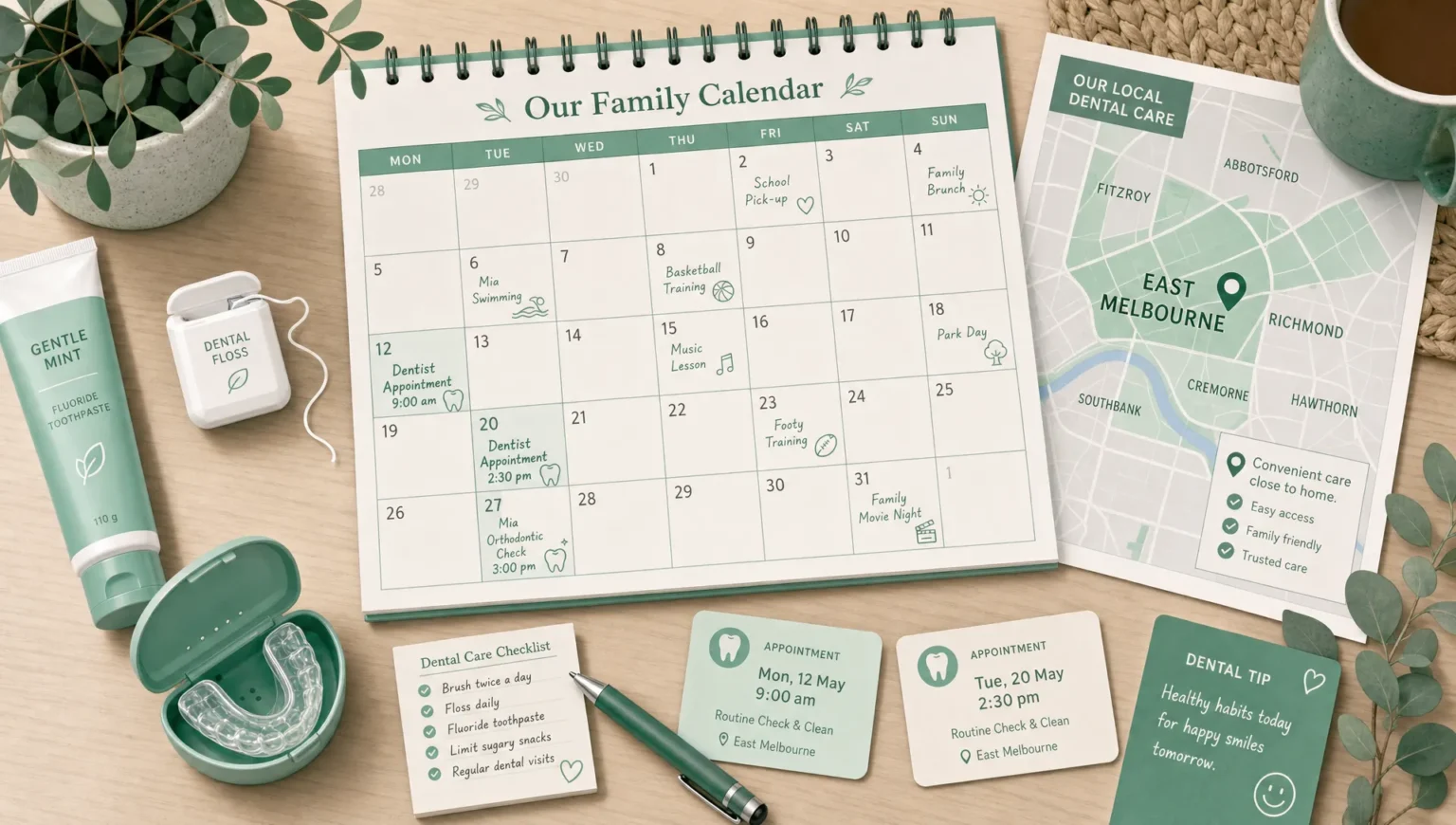
Choosing family dental care in East Melbourne is not just about finding the closest appointment. For most households, it means finding a dental team that can help with everyday prevention, children’s visits, urgent concerns, cosmetic questions and longer-term restorative needs, while making the experience feel clear and manageable.
If you live, work or study around East Melbourne, Jolimont, Richmond, Collingwood, Fitzroy, Abbotsford, Carlton or the Melbourne CBD, convenience matters. So does communication. A good fit should help you understand your options, ask questions without pressure and make decisions based on a proper clinical assessment.
This guide explains what to look for when comparing family dental care in East Melbourne, especially if you are booking for more than one person in your household.
Start with your household’s actual needs
Every family uses dental care differently. A young child may need help building confidence in the chair. A teenager may need preventive advice around sport, diet or orthodontic concerns. Adults may want regular check-ups, gum care, whitening discussions or restorative treatment planning. Older family members may have more complex needs involving worn teeth, missing teeth, dry mouth, medications or dentures.
Before choosing a clinic, write down what your household may need over the next 12 months. This can help you choose a practice that is practical, not just convenient for one appointment.
Useful questions include:
- Who needs a dental appointment now, and who is overdue for a check-up?
- Are there children who need a first or early dental visit?
- Does anyone feel anxious about dental treatment?
- Are you looking for routine care, urgent care, cosmetic advice or ongoing treatment planning?
- Do appointment times need to fit around school, work, city commuting or public transport?
This first step keeps your search focused. Rather than looking for a clinic that seems to do everything, you are looking for one that can communicate well, assess each person properly and explain which services are suitable for each family member.
Check registration, qualifications and scope of care
In Australia, dental practitioners must be registered. If you want to confirm a practitioner’s registration status, you can use the Ahpra public register. This is a sensible step for any healthcare decision, especially if you are comparing clinics online.
Next, look at the range of services available. For family dental care, it can be helpful if a local clinic can assist with common needs such as:
- Routine dental examinations and hygiene appointments
- Preventive advice for children and adults
- Fillings and restorative care
- Gum health checks and maintenance
- Emergency dental assessment
- Teeth whitening discussions where suitable
- Clear aligner or orthodontic referrals where appropriate
- Root canal treatment, crowns, implants or other restorative options when clinically indicated
Not every treatment is suitable for every person. A proper consultation, examination and diagnosis should come before recommendations. Be cautious of advertising or online content that makes treatment sound universal, guaranteed or suitable without assessment.
Prioritise prevention for the whole family
Good family dental care should not only respond when something hurts. Prevention is a key part of maintaining oral health and reducing the chance of avoidable problems.
A prevention-focused appointment may include checking teeth and gums, reviewing brushing and flossing habits, discussing diet and fluoride use, assessing risk factors and recommending a recall interval based on the person’s needs. Children may also benefit from age-appropriate oral hygiene coaching, fissure sealant discussions or advice about mouthguards if they play contact sport.
For adults, prevention can include monitoring gum health, identifying early wear or cracks, discussing dry mouth, reviewing tooth sensitivity and checking existing fillings, crowns or implants. For older adults, it may also involve medication-related oral health considerations and maintaining comfort with chewing.
East Melbourne Dental Group has also written about the role of preventive dentistry in maintaining oral health, which can be useful if you want to understand why regular care is often more than a quick clean.
Consider how the clinic supports children and nervous patients
For many families, the deciding factor is not only clinical services. It is how the dental team communicates.
Children often do better when appointments are calm, simple and not rushed. A supportive dental team may explain instruments in child-friendly language, allow time for questions and focus on building confidence over time. The first visit does not always need to involve complex treatment. In many cases, it is about familiarity, prevention and helping the child feel comfortable with the setting.
Adults can also feel anxious about dental care. Some people have had difficult past experiences, while others worry about cost, discomfort or not knowing what will happen next. When comparing family dental care in East Melbourne, look for a clinic that welcomes questions and explains each step before treatment begins.
Helpful signs include clear appointment information, calm communication, written treatment plans when needed and an approach that gives patients time to consider options. No dental practice can promise a specific experience for every person, but communication style makes a real difference to how supported patients feel.
Make location and access work for real life
A family dental clinic may look suitable online, but practical access still matters. East Melbourne is close to the city, hospitals, schools, sporting precincts and busy commuting routes. If dental appointments are difficult to fit into the week, care can quickly become delayed.
When choosing a clinic, consider:
- Whether the location is convenient from East Melbourne, Jolimont, Richmond, Collingwood, Fitzroy, Abbotsford, Carlton or the CBD
- Whether appointment times work around school and work routines
- How easy it is to book, reschedule or contact the clinic
- Whether public transport, parking or walking access suits your household
- Whether the practice can advise what to do if a dental concern becomes urgent
Online booking can also reduce the friction of arranging care, especially for busy families. It is still worth calling if symptoms are urgent, complex or difficult to describe online.
Understand costs, rebates and treatment planning before you commit
Cost uncertainty is one of the most common reasons people delay dental care. A good family dental provider should be willing to explain fees, likely item numbers where relevant and the difference between essential treatment, optional treatment and monitoring.
For simple appointments, fees may be clearer upfront. For more involved care, costs usually depend on the findings from an examination, X-rays if clinically required and the treatment options available. Written treatment plans can help families compare priorities and make staged decisions where appropriate.
You may also want to ask about:
- Private health insurance claiming and whether on-the-spot claiming is available
- Child Dental Benefits Schedule eligibility for children, if relevant
- DVA arrangements for eligible patients
- Payment timing and whether treatment can be staged when clinically appropriate
- What is included in a quoted fee and what may be separate
For a broader overview of how dental care works locally, including public, private, child and veteran pathways, see this practical guide to dental care in Australia. Eligibility and benefits can vary, so it is always worth confirming your own circumstances before booking treatment.
Plan ahead for dental emergencies
Families often choose a dentist during a routine moment, but urgent problems are when local access becomes especially important. Toothache, swelling, a broken tooth, trauma, a lost filling or a knocked tooth should not be ignored.
When comparing clinics, ask how they manage urgent concerns. You do not need a guarantee of immediate treatment to benefit from clear guidance. A practical clinic should be able to tell you whether to call, what information to provide and when emergency medical care may be necessary.
If you are unsure what counts as urgent, East Melbourne Dental Group has a page about dental emergencies and when to call. Severe swelling, facial trauma, uncontrolled bleeding or symptoms affecting breathing or swallowing require urgent medical attention.
Use a simple comparison checklist
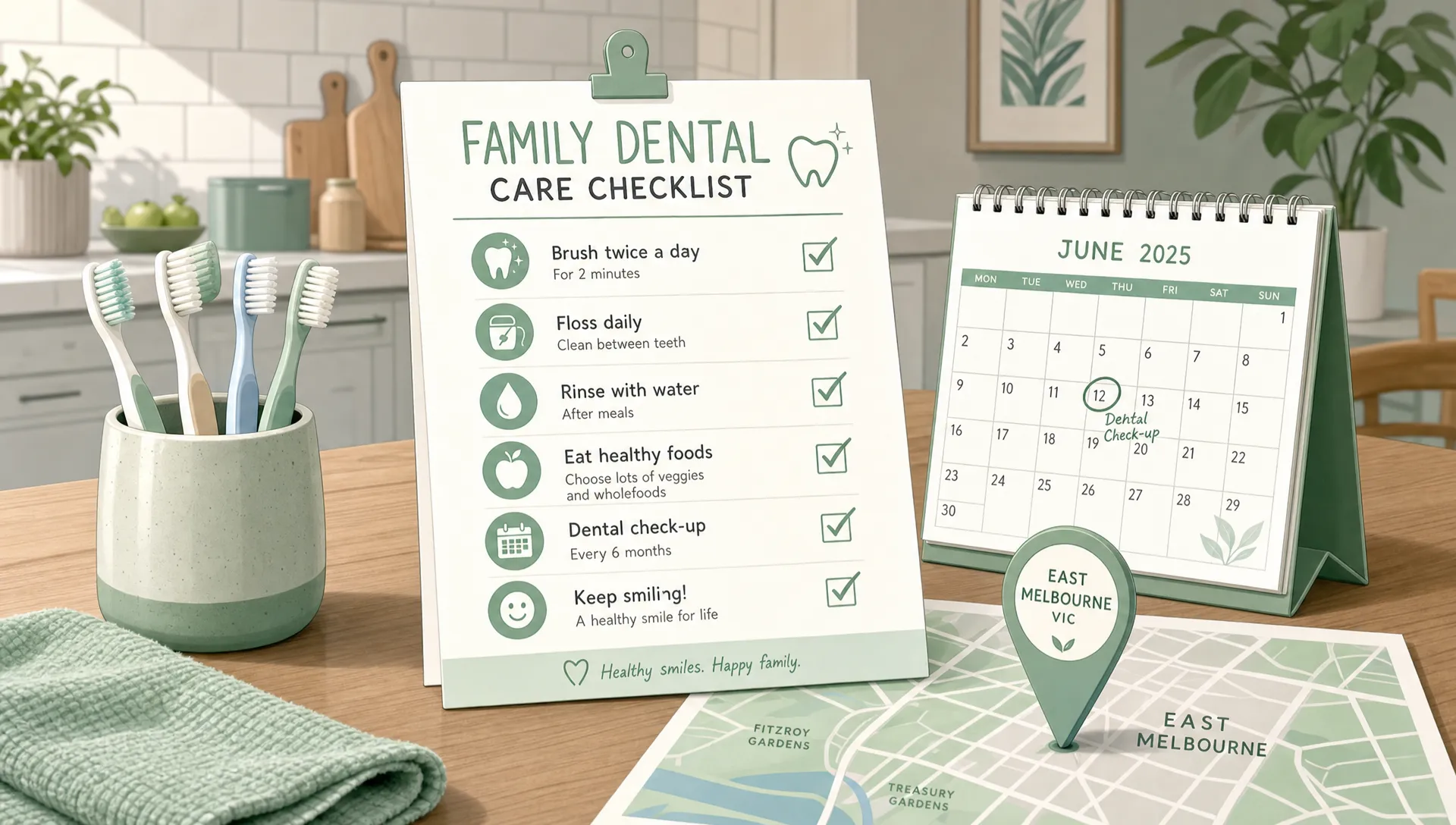
When several clinics appear similar, a checklist can help you compare them calmly. The aim is not to find a perfect practice. It is to find a suitable local provider that communicates clearly and can meet your household’s needs.
| What to check | Why it matters for families |
|---|---|
| Registration and professional standards | Confirms the practitioner is registered to provide dental care in Australia |
| Range of services | Helps your household access routine, urgent, restorative and cosmetic discussions in one local setting where appropriate |
| Child-friendly communication | Supports confidence for younger patients and helps build positive dental habits |
| Support for anxious patients | Helps adults and children ask questions and understand appointments before treatment |
| Clear fees and treatment plans | Reduces uncertainty and helps families plan care responsibly |
| Local access | Makes regular appointments easier from East Melbourne and nearby suburbs |
| Emergency guidance | Gives your household a clearer plan if pain, swelling or trauma occurs |
Consider orthodontic and cosmetic questions carefully
Many families eventually have questions about alignment, whitening or cosmetic dentistry. These topics often come up for teenagers and adults, but they should still begin with an oral health assessment.
For example, whitening may not be suitable for every type of discolouration. Aligners may not be suitable for every bite concern. Veneers, crowns or implants involve different risks, benefits and maintenance needs. A dentist should explain what is clinically appropriate, what alternatives exist and what may happen if treatment is delayed or not chosen.
Families researching online may also come across international examples of dental technology and planning, such as this example of digital orthodontics in Bucharest. Online research can be helpful for learning terminology, but treatment suitability, professional standards and consent processes depend on your local clinical assessment and the practitioner caring for you in Australia.
If a family member is considering cosmetic or orthodontic treatment, look for balanced communication. The discussion should include oral health, function, maintenance, risks, costs and realistic expectations. It should not rely on pressure, urgency or broad promises.
Look for communication that gives you time to decide
A family dental clinic should help you understand your choices without making you feel rushed. This is especially important when a treatment plan includes several steps or when more than one family member needs care.
Good communication usually includes plain language, clinical reasoning and room for questions. You should feel able to ask why a treatment is recommended, what alternatives may be available, what the risks and benefits are and what may happen if you choose to monitor instead.
Be cautious if advice feels unclear, if costs are difficult to understand or if the conversation focuses more on appearance than oral health. Dental treatment decisions should be based on your circumstances, not a generic online pathway.
Think locally, especially if you want ongoing care
Family dental care is often long term. Over time, a local dentist can become familiar with your oral health history, previous treatment, preferences and concerns. This can make monitoring easier and help identify changes between visits.
For East Melbourne families, a local practice can also be practical when appointments need to fit around school pick-up, city workdays, public transport, sports commitments or caring responsibilities. If you live nearby in Richmond, Fitzroy, Collingwood, Abbotsford, Carlton, Jolimont or the Melbourne CBD, staying local may make it easier to keep preventive care on track.
The right choice is not only about services listed on a website. It is about whether the clinic feels accessible, transparent and clinically appropriate for your household.
Frequently Asked Questions
How often should my family visit the dentist? The right interval varies. Some people are advised to attend every six months, while others may need a different schedule based on gum health, decay risk, medical history, age or existing dental work. Your dentist can recommend a recall interval after assessment.
When should children start seeing a dentist? Many families arrange an early dental visit when a child’s first teeth appear or by around their first birthday. Early visits can help with prevention, feeding and brushing advice, and becoming familiar with the dental setting.
Can one dental clinic care for children, adults and older family members? Many general dental clinics provide care across different life stages, but suitability depends on the services required and the practitioner’s assessment. Some complex needs may require referral to another dental practitioner or specialist.
What should I bring to a first family dental appointment? Bring private health insurance details if you have them, relevant medical history, medication information, previous dental records if available and any questions or concerns. For children, it can help to explain the visit in simple, calm language beforehand.
Is cosmetic treatment part of family dental care? It can be, but cosmetic discussions should sit within a broader oral health assessment. A dentist should first check gum health, tooth structure, bite, decay risk and suitability before discussing options such as whitening, aligners or restorations.
Ready to choose family dental care in East Melbourne?
If you are looking for family dental care in East Melbourne or nearby suburbs, East Melbourne Dental Group offers general, cosmetic and restorative dentistry in a patient-focused local setting. The team can discuss your concerns, explain suitable options after assessment and help you plan care for children, adults or older family members.
To ask a question or arrange an appointment, visit the East Melbourne Dental Group contact page. You can also book online at a time that suits you.
Disclaimer
‘The information provided on this website is for general informational and educational purposes only. It is not intended to replace professional dental advice, diagnosis or treatment. Dental needs and treatment outcomes vary between individuals. Always seek advice from a qualified dental practitioner regarding your specific circumstances before making decisions about your oral health or treatment. A consultation and clinical assessment are required to determine which treatment options may be suitable for you. All dental procedures carry potential risks and benefits, which will be discussed with you before treatment.’
Disclaimer
The information provided on this website is for general informational and educational purposes only. It is not intended to replace professional dental advice, diagnosis or treatment. Dental needs and treatment outcomes vary between individuals. Always seek advice from a qualified dental practitioner regarding your specific circumstances before making decisions about your oral health or treatment. A consultation and clinical assessment are required to determine which treatment options may be suitable for you. All dental procedures carry potential risks and benefits, which will be discussed with you before treatment.