
29 July 2026 | News
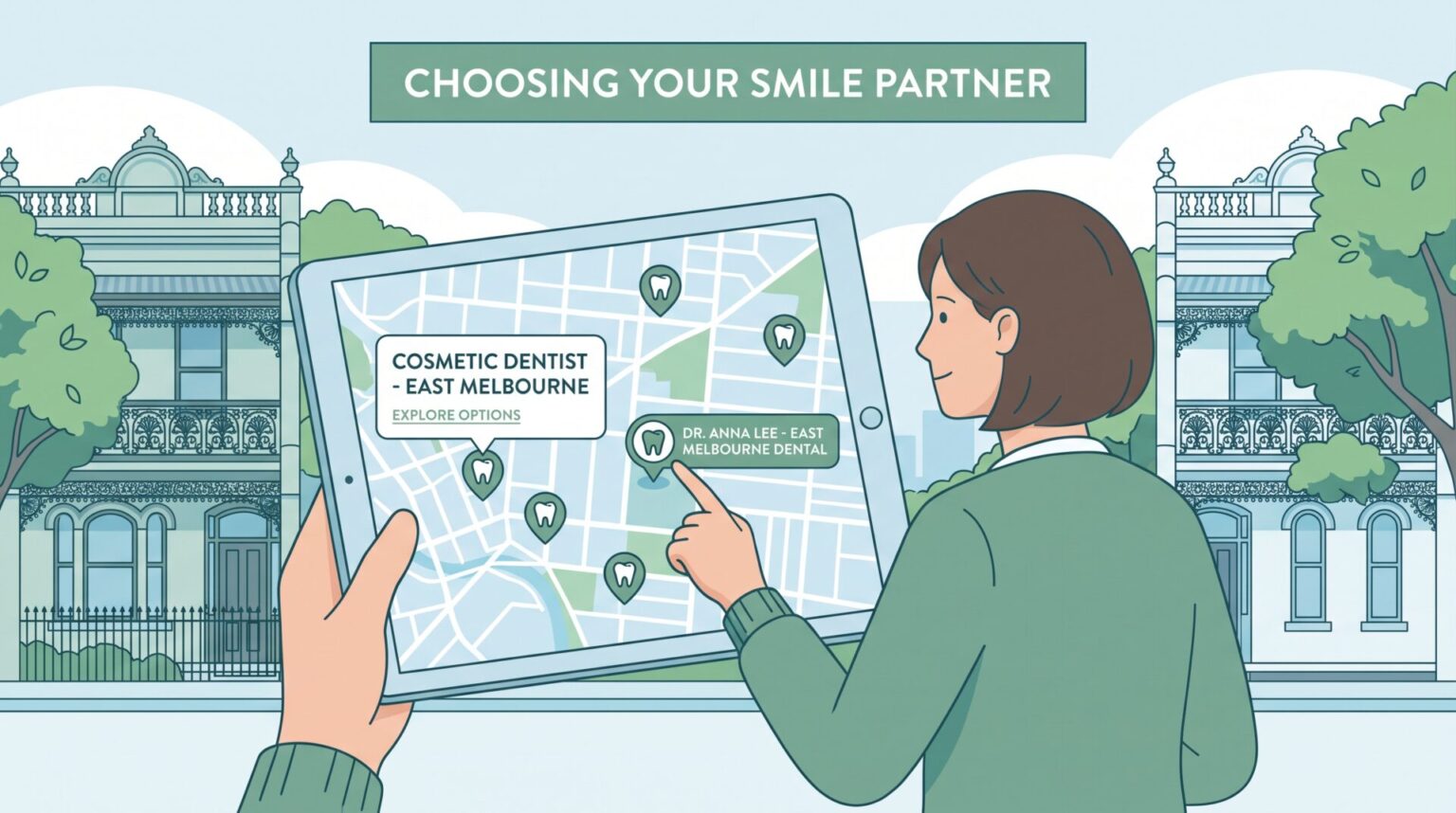
A cosmetic dental appointment can be exciting, but it can also feel overwhelming. You may be comparing whitening, veneers, bonding, clear aligners or restorative options, while also wondering which dentist will understand the result you actually want. If you have searched for a “cosmetic dentist near me”, location is a helpful starting point, but it should never be the only factor.
The right cosmetic dentist in East Melbourne should combine technical skill, ethical advice, careful planning and a communication style that makes you feel comfortable. Cosmetic dentistry is not just about making teeth look brighter or straighter. It is about improving the appearance of your smile in a way that supports your oral health, suits your face, and feels natural to you.
Here is a practical guide to help you choose confidently.
Start with the smile goal, not the treatment
Many people begin by asking for a specific procedure, such as teeth whitening or veneers. A better first step is to define what you want to change. Are your teeth stained, chipped, crowded, worn, uneven, gapped or missing? Do you want a small refresh before an event, or are you looking for a more comprehensive smile makeover?
Different concerns often need different solutions. Discolouration may respond well to professional whitening, while a chipped edge may be better suited to bonding or a ceramic restoration. Crooked teeth might require Invisalign or another orthodontic approach before any cosmetic finishing is considered. Missing teeth may call for restorative planning, including options such as dental implants, depending on your suitability.
A good cosmetic dentist will not push one treatment for every smile. They will assess your teeth, gums, bite, facial proportions, habits and expectations before recommending a plan. They should also explain what each option can and cannot achieve.
Before your consultation, it helps to write down your main priorities. For example, you might care most about a natural colour, minimal tooth reduction, durability, cost, speed, or avoiding invasive treatment. This gives your dentist a clearer understanding of what matters to you.
Check registration, experience and ethical communication
In Australia, “cosmetic dentist” is commonly used to describe a dentist who provides aesthetic dental treatments, but it is not a separate specialist title in the same way that orthodontist or periodontist is. That makes it especially important to check the dentist’s professional registration and experience.
You can confirm a practitioner’s registration through the AHPRA public register. This is a useful baseline check for any dental practitioner you are considering.
Once registration is confirmed, look at the dentist’s experience with the type of treatment you want. If you are considering whitening, ask how they assess sensitivity risk and shade expectations. If you are considering veneers, ask how they plan shape, colour and tooth preparation. If you are considering Invisalign or cosmetic alignment, ask how your bite and retention will be managed after treatment.
Ethical communication matters just as much as technical skill. Be cautious of dramatic promises, guaranteed outcomes or pressure to start treatment immediately. AHPRA’s guidance on advertising regulated health services is designed to protect patients from misleading claims. In practical terms, your cosmetic dentist should be honest about risks, limitations, maintenance and alternative options.
Make sure oral health comes first
Cosmetic dentistry works best on a healthy foundation. Even the most beautiful restoration can fail if there is untreated decay, gum disease, grinding, infection or unstable bite pressure. That is why a thorough examination should come before any aesthetic treatment plan.
A comprehensive assessment may include checking your teeth for cracks or decay, assessing gum health, reviewing old fillings and crowns, taking X-rays where clinically appropriate, discussing your medical history and looking at your bite. If gum inflammation or plaque build-up is present, your dentist may recommend hygiene treatment before moving ahead with cosmetic work.
This is not a delay for the sake of it. Healthy gums frame the teeth, affect the final appearance, and help improve the longevity of cosmetic treatment. For patients who have not had a check-up for a while, regular hygienist appointments can be an important part of preparing for cosmetic dentistry and maintaining results afterwards.
If a dentist is willing to place veneers, crowns or whitening over active dental problems without addressing them first, consider that a red flag.
Ask how the treatment plan will be designed
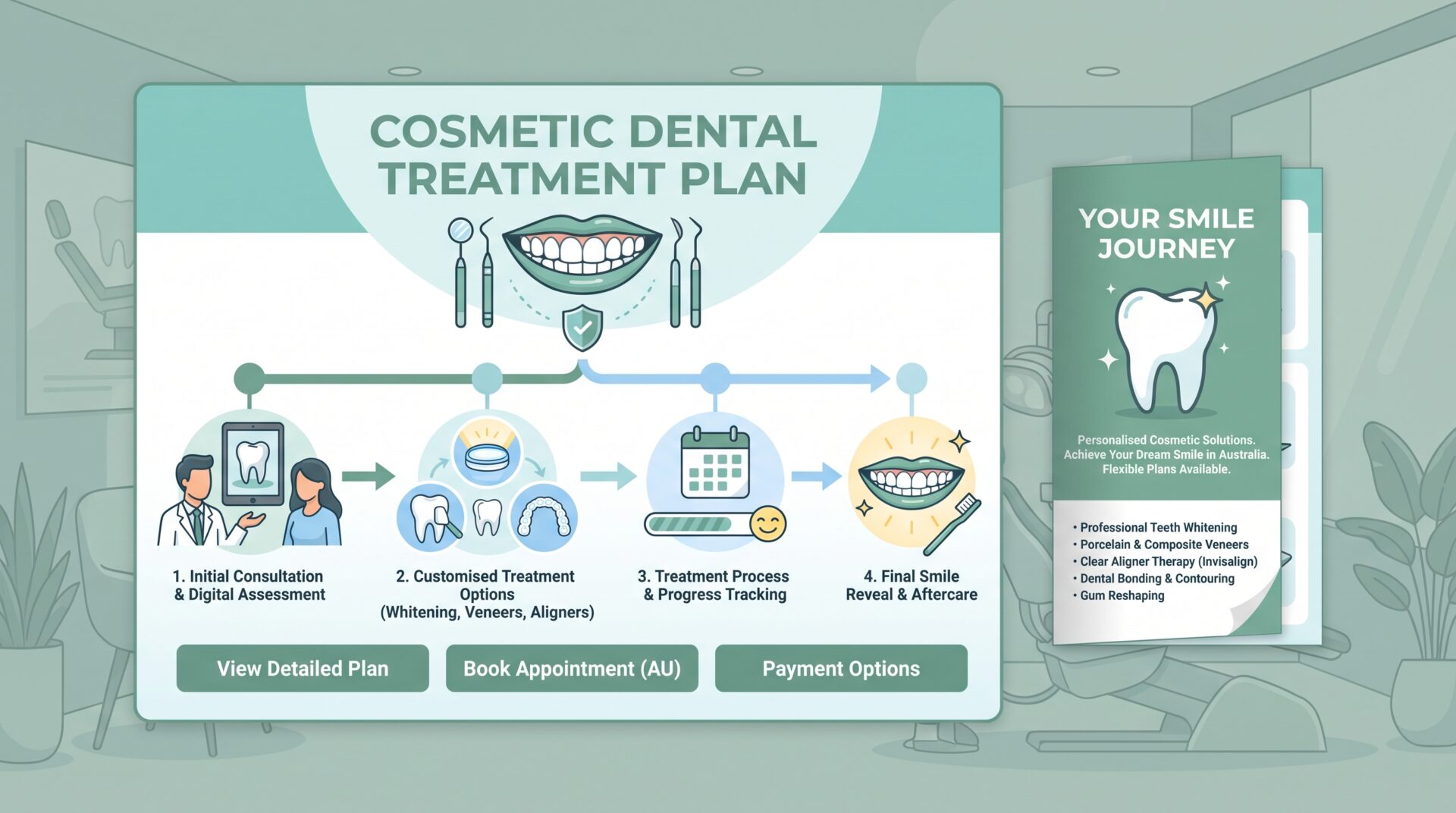
Cosmetic dentistry should be planned, not improvised. During your consultation, ask how the dentist will assess your smile and communicate the proposed result. Depending on the treatment, planning may involve photographs, shade selection, X-rays, scans, models, wax-ups or staged appointments.
You do not need to understand every technical detail, but you should understand the decision-making process. A clear plan helps reduce surprises, especially for treatments that affect tooth shape, colour or position.
| What to ask | Why it matters |
|---|---|
| What are my realistic options? | Good cosmetic care usually offers more than one pathway, from conservative to comprehensive. |
| How will you assess my bite and gum health? | Aesthetic results need to function comfortably and last well. |
| Will this treatment remove or alter tooth structure? | Some treatments are reversible or minimally invasive, while others are not. |
| What maintenance will I need? | Whitening, bonding, veneers, crowns and aligners all have different care requirements. |
| What are the risks or limitations? | Honest discussion helps you give informed consent. |
| What happens if I need urgent care during or after treatment? | Continuity of care is important, especially for complex or staged procedures. |
Look for a style that matches your comfort level
Choosing a cosmetic dentist is not only about clinical qualifications. You also need to feel comfortable asking questions, expressing concerns and taking time to decide. This is particularly important if you feel anxious about dental visits.
A patient-focused dentist should explain procedures in plain English, check your comfort during appointments and avoid making you feel judged about your teeth. If you have had negative dental experiences in the past, tell the practice when you book or at the start of your consultation. The way the team responds can tell you a lot about whether the clinic is the right fit.
East Melbourne Dental Group emphasises gentle, patient-focused care, and the practice has highlighted this approach in its profile of Dr Graham Culy as a gentle Melbourne dentist. For cosmetic treatment, that gentle approach matters because appointments may involve detailed planning, multiple visits and careful communication about your preferences.
Trust your instincts. If you feel rushed, dismissed or pressured, it is reasonable to seek another opinion before committing.
Compare treatment options, not just prices
Cost is a real consideration, but the cheapest cosmetic option is not always the best value. A lower fee may not include the same planning, materials, follow-up, maintenance or complexity. On the other hand, the most expensive option is not automatically the right one for your goals.
A good cosmetic dentist should help you compare value. For example, professional whitening may be a conservative and effective choice for general discolouration, but it will not change the shape or position of teeth. Bonding may repair small chips and improve edges, but it may stain or wear over time. Veneers can create more significant changes, but they require detailed planning and may involve permanent alteration to tooth structure. Invisalign can improve alignment, but results depend on your bite, compliance and retention.
Ask for a written treatment plan that explains stages, estimated fees, alternatives and any likely maintenance. If the plan is complex, it is also reasonable to ask which parts are essential and which are optional.
Review examples carefully, but keep expectations realistic
Before and after photos can be helpful, especially when they show cases similar to yours. However, photos should not be the only basis for choosing a cosmetic dentist. Lighting, angles, tooth condition, gum shape and patient goals all affect outcomes.
If a practice shows examples, ask whether the cases are comparable to your situation. A result achieved on healthy, well-aligned teeth may not translate directly to teeth with wear, crowding or gum recession. You can also ask how the dentist avoids an overly bright, bulky or artificial look if your goal is a natural smile.
The best cosmetic result is one that suits your face, your age, your speech, your bite and your personality. For many patients, subtle improvements can be more satisfying than a dramatic transformation.
Consider location, access and ongoing care in East Melbourne
Searching for a cosmetic dentist near me often reflects a practical need. You want appointments that fit around work, family, public transport, parking or city commitments. This matters even more if your treatment involves multiple visits, review appointments or long-term maintenance.
A local East Melbourne dentist can also provide continuity of care. If you have sensitivity after whitening, a loose temporary restoration, an aligner concern or a chipped bonding repair, it is reassuring to have a nearby team that already understands your history.
Convenient booking is another factor. East Melbourne Dental Group allows patients to request an appointment from a mobile device, which can make it easier to organise a consultation without putting it off.
Red flags when choosing a cosmetic dentist
Most dental practices aim to do the right thing, but it is still worth knowing what to watch for. Take extra care if you notice any of the following:
- The dentist recommends treatment without a proper examination.
- You are promised a perfect result or a permanent result with no maintenance.
- The practice pressures you to decide on the day.
- Risks, alternatives and limitations are not explained clearly.
- The plan focuses only on appearance and ignores gum health, bite or decay.
- You cannot get a clear written estimate or staged treatment plan.
- Your questions are treated as an inconvenience.
A confident dentist should welcome informed questions. Cosmetic dentistry is a personal investment, and you deserve to understand your choices before proceeding.
What to bring to your first consultation
To get the most from your appointment, bring any relevant dental history, a list of medications and details of previous cosmetic or orthodontic treatment. If you have inspiration photos, bring them as a communication tool, not as an exact template. Your teeth, gums and facial features are unique, so the final plan should be personalised.
It also helps to be honest about your budget, timeline and concerns. If you are preparing for a wedding, job interview or major event, timing may affect which options are realistic. If you are nervous, sensitive or worried about pain, the dentist can talk through ways to make care more comfortable.
A good consultation should leave you clearer, not more confused. You should understand what is possible, what is advisable, what the next step is, and whether you feel comfortable with the dentist’s approach.
Frequently Asked Questions
What is the difference between a general dentist and a cosmetic dentist? A general dentist focuses on oral health, prevention and treatment of dental disease. A cosmetic dentist is usually a general dentist who also provides treatments that improve the appearance of teeth and smiles, such as whitening, bonding, veneers or aligner-related smile improvements.
Is cosmetic dentistry safe? Cosmetic dentistry can be safe when it is properly planned, clinically appropriate and performed by a registered dental practitioner. Safety depends on your oral health, the procedure, the materials used and how well risks and alternatives are explained before treatment.
Should I whiten my teeth before getting veneers or bonding? Often, whitening is considered before colour-matched cosmetic work because restorations do not whiten the same way natural teeth do. Your dentist can advise the right sequence based on your goals and suitability.
How do I know whether Invisalign, veneers or whitening is right for me? The right choice depends on whether your main concern is tooth colour, shape, position, spacing, wear or missing teeth. A consultation is the best way to compare options because different treatments solve different problems.
Is it better to choose a cosmetic dentist close to home or work? Convenience matters, especially for multi-visit treatment and maintenance. However, location should be balanced with registration, experience, communication, treatment planning and how comfortable you feel with the practice.
Ready to discuss cosmetic dentistry in East Melbourne?
If you are considering teeth whitening, Invisalign, restorative cosmetic care or a broader smile improvement, start with a consultation rather than guessing which treatment you need. East Melbourne Dental Group offers general, cosmetic and restorative dentistry in a welcoming environment, with treatment plans tailored to individual needs.
You can explore your options with a local team by visiting East Melbourne Dental Group and arranging a time that suits you.
Disclaimer
The information provided on this website is for general informational and educational purposes only. It is not intended to replace professional dental advice, diagnosis or treatment. Dental needs and treatment outcomes vary between individuals. Always seek advice from a qualified dental practitioner regarding your specific circumstances before making decisions about your oral health or treatment. A consultation and clinical assessment are required to determine which treatment options may be suitable for you. All dental procedures carry potential risks and benefits, which will be discussed with you before treatment.