
11 August 2026 | Cosmetic Dentistry, Invisalign, Veneers
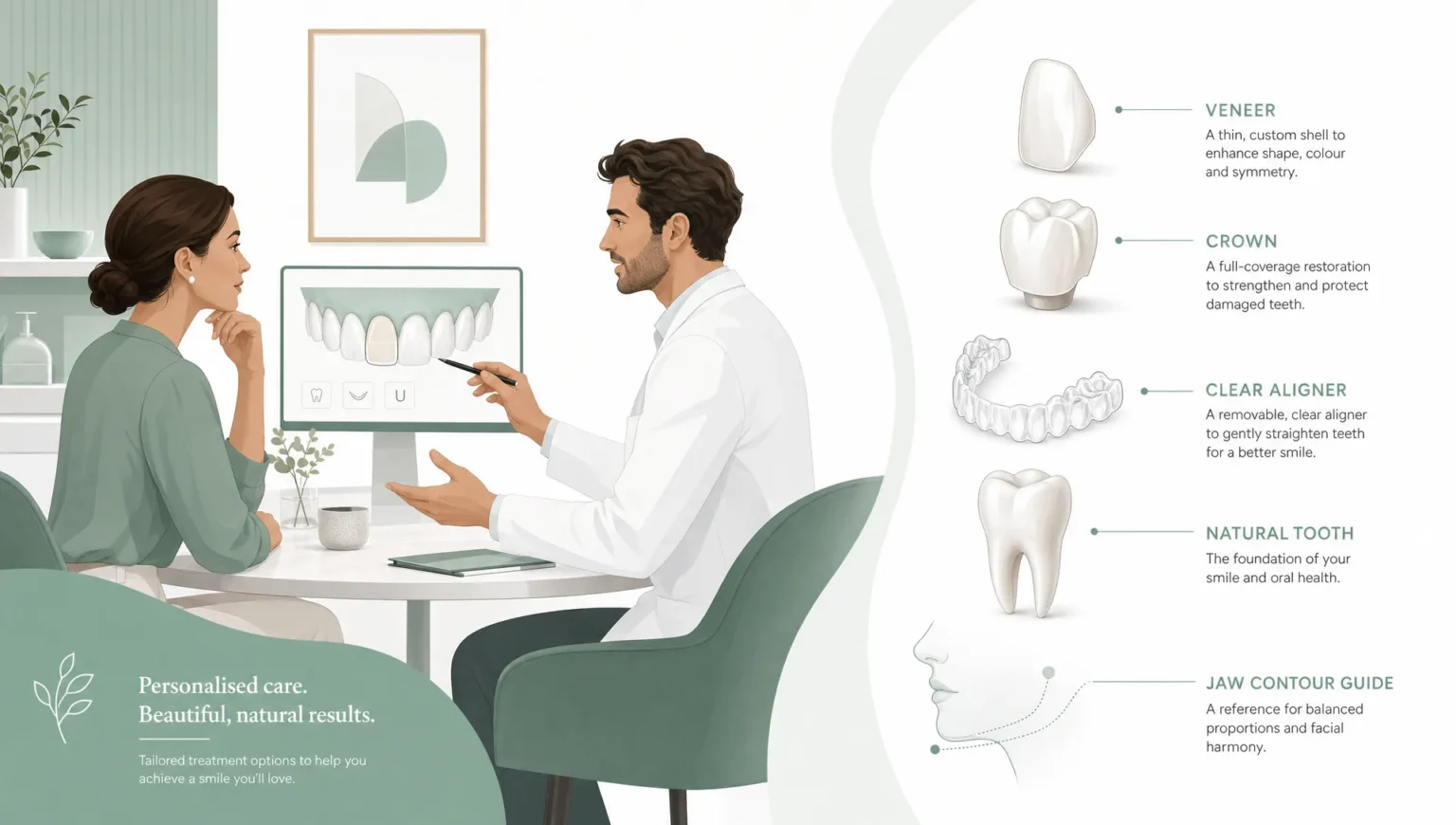
Choosing a cosmetic dental clinic is not just about finding the brightest smile gallery or the quickest appointment. The right clinic should help you understand what is possible, what is healthy, what is realistic, and what will still look good years from now.
For many people, cosmetic dentistry sits somewhere between health care and confidence. You may be looking at teeth whitening before an event, veneers for worn or uneven teeth, Invisalign for alignment, crowns for damaged teeth, or dental implants to replace missing teeth. Whatever your goal, the quality of the clinic matters because cosmetic treatment affects your bite, gums, enamel, comfort, and long term oral health.
Here is what to look for in a cosmetic dental clinic before you commit to treatment.
Start with registration, experience, and transparency
In Australia, the term "cosmetic dentist" is often used to describe a dentist who provides aesthetic dental treatments. It is not a separate specialist registration in the same way that orthodontics or oral surgery can be. That makes due diligence important.
A reputable clinic should make it easy to understand who will be treating you, what their qualifications are, and whether they are registered to practise. You can verify a practitioner through the Ahpra public register, which lists health practitioners registered in Australia.
Experience also matters, but it should be discussed in a specific way. Instead of simply asking whether a dentist "does veneers" or "does implants", ask how they assess suitability, what cases they commonly treat, and what options they would consider before recommending an irreversible treatment.
If you are comparing individual practitioners as well as clinics, this guide on how to choose a cosmetic dentist in East Melbourne covers helpful questions about professional judgement, communication, and patient comfort.
Look for a health first approach, not just a smile makeover
Cosmetic dentistry should begin with oral health. A clinic that recommends veneers, whitening, crowns, aligners, or implants without checking your teeth and gums properly is not taking a comprehensive approach.
Before planning cosmetic treatment, the clinic should assess things like decay, gum health, enamel quality, cracks, old restorations, bite forces, grinding, tooth wear, jaw comfort, and oral hygiene. This matters because cosmetic work placed on unhealthy foundations can fail earlier, feel uncomfortable, or require more treatment later.
A health first cosmetic consultation may include:
- A discussion of your goals, concerns, budget, and timeline
- A full dental examination, including gum assessment where appropriate
- Photographs, radiographs, or scans when clinically needed
- A review of your bite, wear patterns, and existing restorations
- A staged plan if general dental care is needed before cosmetic treatment
This is especially important if you are considering porcelain veneers, crowns, implants, or orthodontic alignment. These treatments can be excellent in the right case, but they need planning, not guesswork.
Ask whether the clinic offers more than one solution
A strong cosmetic dental clinic will not push every patient towards the same treatment. If a clinic only talks about veneers, every smile concern may start to sound like a veneer case. If it only focuses on whitening, it may miss alignment, shape, wear, or restorative needs.
The best treatment for your smile depends on what you want to change and what is causing the issue. Discolouration may respond well to professional whitening. Crowding may be better managed with clear aligners. A chipped tooth may need bonding, a veneer, or a crown depending on its size and structure. A missing tooth may involve an implant, bridge, or other restorative option.
At East Melbourne Dental Group, cosmetic dentistry may include options such as whitening, veneers, crowns, Invisalign consultations, dental implants, and broader general dental care. If you are mainly interested in colour, you may also find this article on professional teeth whitening useful before your consultation.
| Smile goal | Possible options to discuss | Why assessment matters |
|---|---|---|
| Whiter teeth | Professional whitening, stain management, replacement of old restorations | Fillings, crowns, and veneers do not whiten like natural enamel |
| Straighter teeth | Invisalign or other orthodontic options, restorative reshaping in selected cases | Alignment affects bite, gum health, and treatment durability |
| Worn or chipped teeth | Bonding, veneers, crowns, bite assessment, grinding management | Wear may continue if the cause is not addressed |
| Missing teeth | Dental implants, bridges, dentures, full arch options such as All-On-4 | Bone, gums, bite, and medical history influence suitability |
| Uneven smile shape | Contouring, bonding, veneers, crowns, gum assessment | Tooth proportions and gum levels need to be considered together |
A clinic that presents several reasonable pathways, including the option to do nothing immediately, is usually practising more ethically than one that makes every case sound urgent.
Expect clear communication and informed consent
Good cosmetic dentistry is collaborative. You should not leave a consultation confused about what is being recommended, why it is being recommended, or what the trade-offs are.
Informed consent means more than signing a form. It means the clinic has explained the benefits, limitations, risks, costs, alternatives, maintenance requirements, and expected lifespan of the treatment in language you can understand.
For example, veneers can improve tooth shape and colour, but they may involve enamel preparation and future replacement. Whitening is conservative, but it may cause temporary sensitivity and may not change the colour of existing fillings or crowns. Clear aligners can improve alignment, but they require compliance and retention afterwards. Dental implants can be highly functional, but they require adequate assessment and ongoing maintenance.
A good clinic should welcome questions such as:
- What are the conservative options first?
- What happens if I choose not to treat this now?
- How long is this likely to last?
- What maintenance will I need?
- What could go wrong, and how would we manage it?
- Are there less invasive alternatives?
If the answers feel rushed, vague, or overly sales focused, take more time before deciding.
Review before and after photos carefully
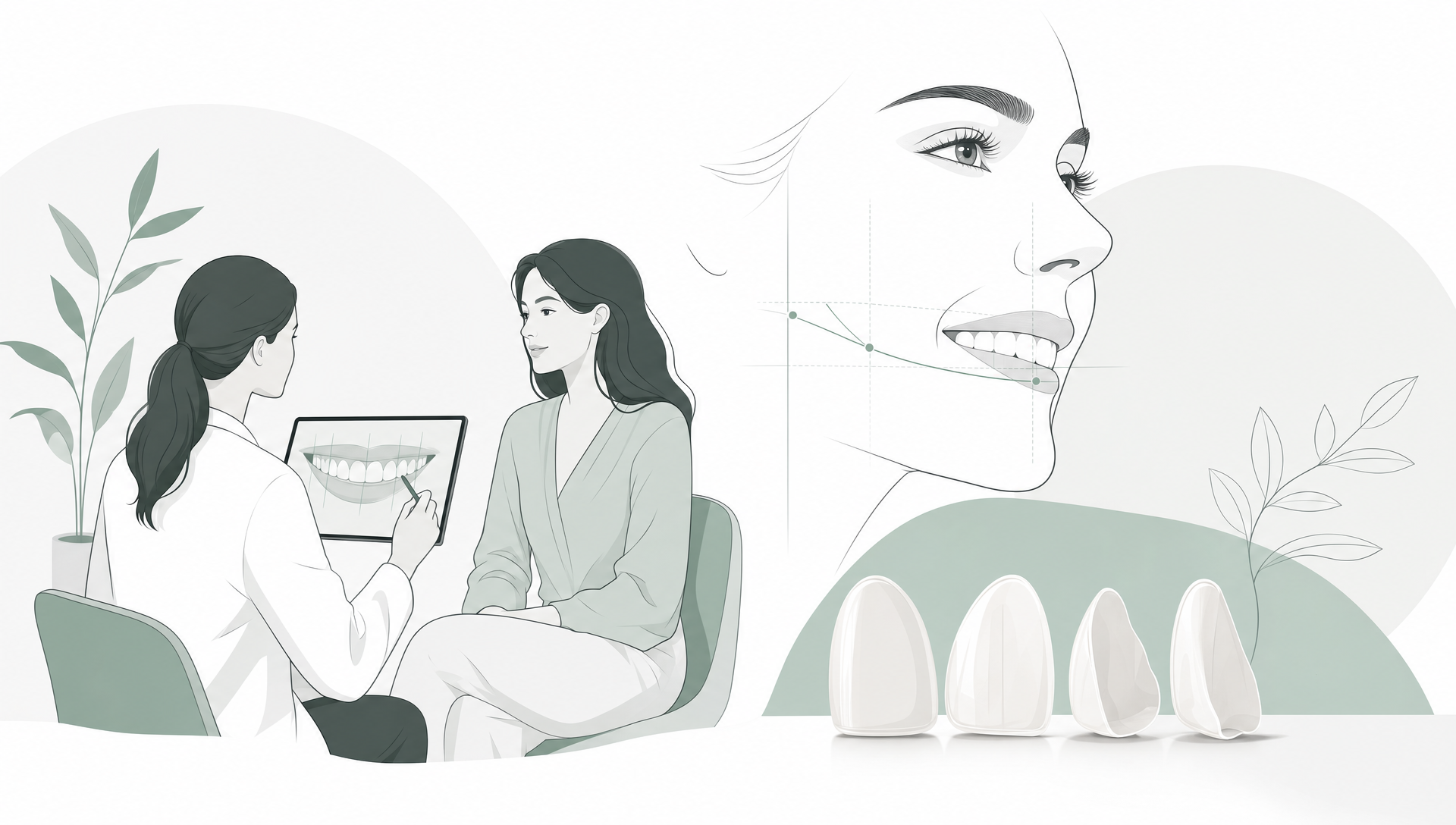
Before and after photos can be useful, but they need context. Ask whether the images are actual cases treated by the clinic or dentist, whether they show similar concerns to yours, and whether they were taken under consistent lighting and angles.
Look beyond brightness. Natural cosmetic dentistry should harmonise with the face, lips, gum line, and age of the patient. Teeth that look too opaque, too bulky, or too uniformly white may not be the best benchmark for your own result.
A trustworthy clinic will not promise that your outcome will match someone else's photo. Instead, they will use examples to explain possibilities, limitations, and the type of aesthetic you prefer.
Consider the clinic's planning technology and laboratory relationships
Modern cosmetic dentistry often benefits from digital planning, photography, scans, and preview tools. These can help you and your dentist discuss tooth proportions, alignment, colour, and smile design more clearly.
Technology, however, should support clinical judgement rather than replace it. A scanner or simulation is only valuable when it is used alongside a careful examination and a realistic treatment plan.
For veneers, crowns, bridges, and implant crowns, ask how the clinic works with dental laboratories. High quality ceramic work depends on communication between the dentist, patient, and technician. Shade selection, translucency, shape, surface texture, and fit all influence the final result.
If a clinic can explain how restorations are designed, made, fitted, and reviewed, that is a positive sign.
Pay attention to comfort, anxiety support, and trust
A cosmetic dental clinic should make you feel listened to, not judged. Many patients seek cosmetic treatment after years of feeling self-conscious about their teeth. Others may have had difficult dental experiences in the past.
The right clinic will take time to understand your concerns and explain treatment in a calm, respectful way. If you feel nervous, ask about appointment pacing, local anaesthetic, breaks during treatment, and whether sleep dentistry or other comfort options may be suitable for your situation.
For patients who feel anxious before appointments, this article on comfort dentistry for nervous patients in Melbourne explains how communication, predictability, and a patient centred approach can make dental care easier to manage.
Comfort also includes the practical experience of visiting the clinic. Consider appointment availability, location, communication with the front desk, follow-up systems, emergency support, and whether you feel rushed when asking questions.
Check fees, payment plans, and what is included
Cosmetic dentistry costs vary because cases vary. A single whitening appointment is very different from a full mouth rehabilitation, orthodontic treatment, multiple ceramic restorations, or implant dentistry.
A clear clinic should provide a written treatment plan that explains the stages of care and likely fees. It should also clarify what is included, such as records, reviews, retainers, temporary restorations, maintenance visits, or replacement costs if something needs adjustment.
Payment plans can make treatment more manageable, but they should never be used to pressure you into starting before you are ready. Take time to compare the proposed treatment, not just the monthly payment.
Be cautious if a quote seems unusually cheap without explaining materials, planning, laboratory work, follow-up, or clinical complexity. Value in cosmetic dentistry is not simply the lowest fee. It is the balance of safety, planning, skill, materials, communication, comfort, and longevity.
Think about whole body health and lifestyle factors
Cosmetic dental outcomes can be influenced by more than teeth alone. Smoking, reflux, grinding, diet, dry mouth, certain medications, diabetes, sleep quality, and oral hygiene can all affect gums, enamel, healing, and maintenance.
A thoughtful clinic will ask about relevant medical history and lifestyle factors before recommending treatment. This is not about judgement. It is about planning dentistry that suits your body and your habits.
The same principle applies across health care: lasting results are usually built on proper assessment, personalised planning, and follow-up. For example, medically supervised weight management services such as Healthy Weight Clinics emphasise tailored care and ongoing monitoring rather than one-size-fits-all advice. Cosmetic dentistry should follow a similar standard of individualised care within its own field.
If a dentist identifies factors such as grinding, gum inflammation, or high decay risk, they may recommend managing those first. That can feel slower, but it often protects your final cosmetic result.
Look for realistic promises, not instant perfection
Cosmetic dentistry can be transformative, but it is still health care. Be wary of clinics that guarantee perfection, promote extreme whiteness as the only goal, or use heavy discounts and countdown offers to push urgent decisions.
Good dentistry respects biology. Teeth have nerves, gums respond to pressure and hygiene, ceramic restorations need maintenance, and alignment takes time. Even beautiful results require realistic planning and ongoing care.
A reliable cosmetic dental clinic will discuss:
- What can be achieved conservatively
- What cannot be changed without more complex treatment
- How long treatment may take
- How your result will be maintained
- What future replacement or review may involve
The most natural results often come from restraint. Sometimes the best plan is whitening plus minor bonding. Sometimes it is alignment before veneers. Sometimes it is restoring worn teeth for function first, then refining appearance.
Red flags when choosing a cosmetic dental clinic
Some warning signs are subtle. Others are obvious. If you notice several of these, consider getting a second opinion before proceeding.
Red flags include high pressure sales tactics, no proper examination before quoting major treatment, reluctance to discuss risks, unclear practitioner credentials, no written treatment plan, limited explanation of alternatives, unrealistic guarantees, poor infection control impressions, or a result that seems designed for social media rather than your face and oral health.
It is also a concern if you are made to feel embarrassed about your current smile. Ethical cosmetic dentistry should be respectful. The goal is to help you make informed choices, not to create insecurity.
A simple checklist before you book
Before choosing a cosmetic dental clinic, ask yourself whether the clinic has demonstrated the following:
- Registered dental practitioners and clear professional information
- A comprehensive oral health assessment before cosmetic planning
- Multiple treatment options rather than a single default solution
- Honest discussion of risks, alternatives, maintenance, and fees
- Natural looking case examples with appropriate context
- Good communication and a calm, respectful environment
- Clear follow-up, emergency, and maintenance processes
- A treatment plan that suits your goals, health, budget, and timeline
If the answer is yes, you are more likely to be in a clinic that treats cosmetic dentistry as careful clinical care, not just a visual upgrade.
Frequently Asked Questions
What is the most important thing to look for in a cosmetic dental clinic? Look for a clinic that prioritises oral health before appearance. Cosmetic treatment should be based on a proper examination, clear diagnosis, realistic options, informed consent, and a plan for maintaining the result.
Should I choose a clinic based on before and after photos? Photos can help, but they should not be the only factor. Ask whether the cases are the clinic's own work, whether the concerns are similar to yours, and what treatment was required to achieve the result.
Is cosmetic dentistry painful? Many cosmetic treatments can be completed comfortably with appropriate planning and local anaesthetic where needed. If you are nervous, ask the clinic how they support anxious patients and what comfort options may be suitable.
Are veneers always the best option for a better smile? No. Veneers can be excellent for selected cases, but whitening, bonding, crowns, clear aligners, gum treatment, or no treatment may be more appropriate depending on your teeth and goals.
How do I know if a cosmetic dental quote is fair? A fair quote should be explained in writing and linked to a clear treatment plan. It should outline stages, inclusions, likely maintenance, alternatives, and why the recommended option suits your case.
Ready to explore your options?
If you are considering cosmetic dentistry in East Melbourne, start with a conversation rather than a commitment. East Melbourne Dental Group offers cosmetic and general dental care, including options such as whitening, veneers, crowns, Invisalign consultations, dental implants, emergency care, children's dentistry, sleep dentistry, payment plans, and free cosmetic consultations.
A personalised consultation can help you understand what is possible for your smile, what should be treated first, and which options fit your goals comfortably. To take the next step, contact East Melbourne Dental Group and book a time to discuss your smile with an experienced dental team.
Disclaimer
The information provided on this website is for general informational and educational purposes only. It is not intended to replace professional dental advice, diagnosis or treatment. Dental needs and treatment outcomes vary between individuals. Always seek advice from a qualified dental practitioner regarding your specific circumstances before making decisions about your oral health or treatment. A consultation and clinical assessment are required to determine which treatment options may be suitable for you. All dental procedures carry potential risks and benefits, which will be discussed with you before treatment.