
22 October 2026 | Children's Dentistry, General Dentistry
Between school drop-offs, work meetings and after-school activities, online dental booking can make arranging family appointments more convenient. But finding an available time is only part of the job. Each person may need a different appointment length, younger children may need a parent beside them and a booking request may still need confirmation. A little household planning can help you avoid overlapping visits, unnecessary trips and last-minute changes.
The aim is to choose appointments your family can realistically attend, while making sure the dental team has enough information to plan appropriate care.
Start with the whole visit, not just the appointment time
Before choosing a slot, check your family calendar for school commitments, work deadlines and who will accompany each child. Allow time for travel, parking, any paperwork and getting everyone settled. An appointment that technically fits between two commitments may still leave you rushing.
For younger children, consider their usual routines. A time when they are generally rested and comfortable may be more practical than squeezing a visit in after a demanding school day. Availability will vary, so ask the practice about suitable options rather than assuming particular hours are offered.
Back-to-back appointments can reduce separate trips, but they are not always the best arrangement. If one child needs your full attention, supervising a sibling in the waiting room may be difficult. Ask whether consecutive visits are possible and whether another adult should come along.
Also consider continuity. If a family member feels comfortable with a particular dentist, keeping that preference may matter more than selecting the earliest available slot.
Make online dental booking work for each family member
Treat each person’s visit as a separate clinical appointment, even when you want to attend together. A parent’s routine examination, a child’s first visit and a teenager’s tooth pain may require different arrangements.
Use the appointment descriptions provided by the practice. If none clearly matches the reason for the visit, contact reception before selecting an option simply because it has a convenient time.
| Family member’s situation | Information to provide | Scheduling consideration |
|---|---|---|
| Routine dental examination | Whether they are a new or existing patient and any concerns | Ask about the expected appointment length |
| Child’s first dental visit | The child’s age and whether they have visited a dentist before | Choose a manageable time and confirm who should attend |
| Dental pain or a broken tooth | What happened, when it started and any swelling | Call for advice rather than waiting for a routine slot |
| Follow-up treatment | The treatment or visit recommended by the dentist | Follow the timing and preparation instructions given |
Do not assume one booking covers the whole household. Confirm that every person has their own appointment and that any request to attend together has been acknowledged.
Routine review intervals should follow the dentist’s advice for each person. Family members do not necessarily need appointments on the same schedule, even if grouping visits would be convenient.
Leave notes that help the team prepare
Useful notes make online dental requests easier for the practice to assess. Briefly explain the reason for the visit, any symptoms and anything that could affect how the appointment is managed.
For a child, this might include a previous difficult experience, sensory sensitivities or a need for extra explanation. For an adult, it could be a strong gag reflex, dental anxiety or a preference to discuss treatment before proceeding. These details help start a conversation, but they do not guarantee a particular appointment format.
If someone is nervous, these gentle dental care tips for anxious patients can help you identify what to tell the team before the visit.
Check names, dates of birth and contact details carefully, especially when booking several family members. Identify the patient separately from the parent or carer arranging the appointment.
Provide health information through the practice’s requested channels. Avoid putting extensive medical histories, payment card details or unrelated sensitive information into a general booking message. If you are unsure what is needed, ask reception how to supply it securely.
Confirm every visit before rearranging your day
An online dental request is not always a confirmed appointment. Some systems offer confirmed bookings, while others send a preferred date and time to reception for review. Read the wording on the form and any response carefully.
East Melbourne Dental Group’s mobile appointment request information explains that requests are confirmed by phone or email. Until you receive confirmation, avoid assuming that your preferred time has been reserved.
For a household booking, check the details for every patient:
- The confirmed date, start time and practice location.
- The patient’s name and reason for attending.
- Whether visits are consecutive or overlap.
- Any arrival, preparation or parent attendance instructions.
- How to change the appointment and which cancellation terms apply.
Once confirmed, add each appointment to the calendar used by the adults responsible for transport and care. Include departure time as well as the appointment itself. A reminder to leave home is often more useful than an alert that arrives when you should already be at the practice.
If a response has not arrived, check your spam folder and contact the practice. Avoid submitting several identical requests, which can create confusion. Likewise, do not assume that cancelling one family member’s appointment automatically cancels the others.
Check costs and payment arrangements before the day
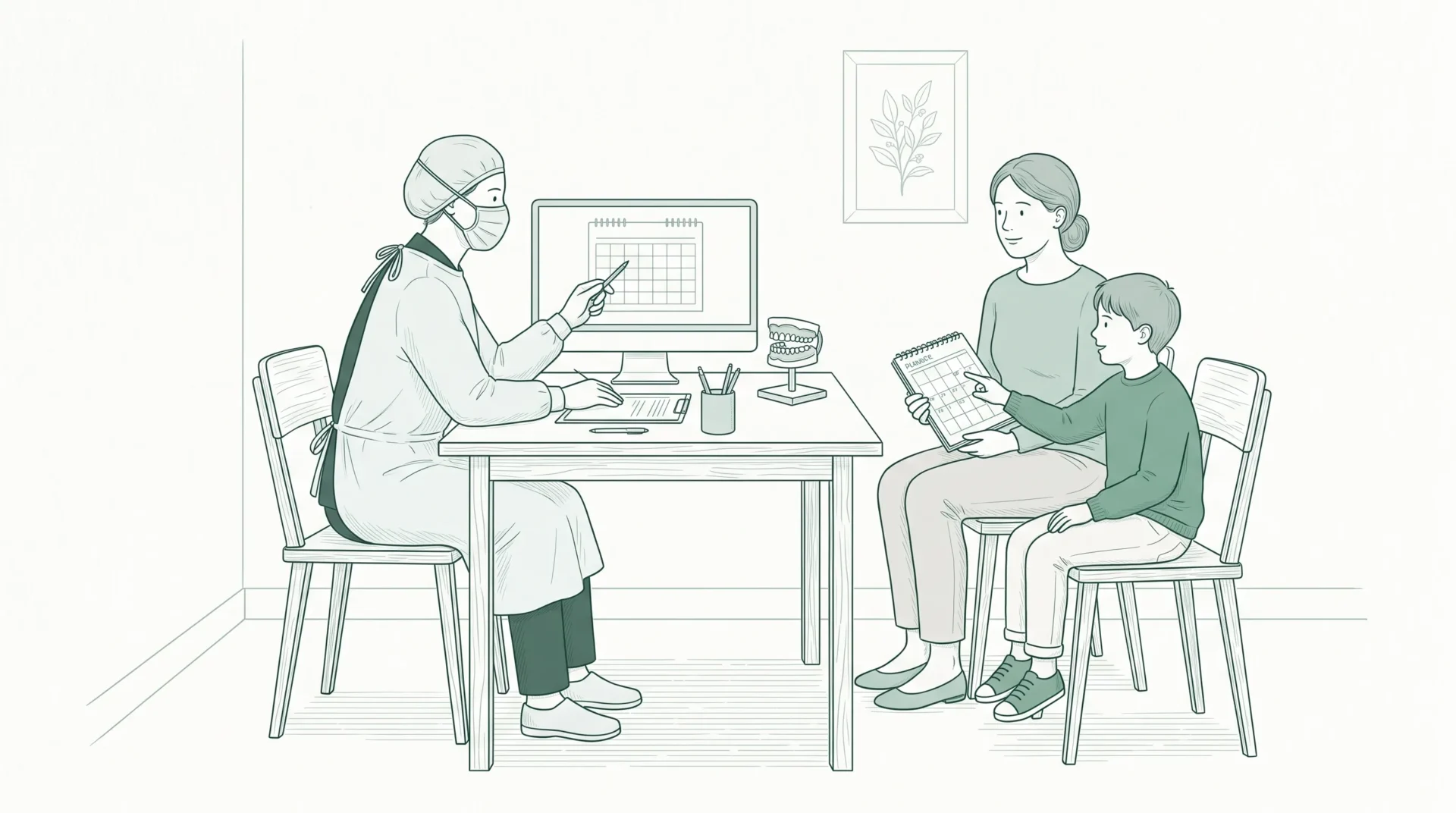
Online dental booking is more useful when it leaves you prepared for the financial side of the visit too. Ask what the planned appointment includes, whether an estimate is available and what payment arrangements apply. An initial estimate may change if the examination identifies additional care, so ask how any further costs will be discussed.
If your family has private health insurance, check the relevant policy limits, waiting periods and available benefits with your insurer. Do not assume each person has the same remaining cover or that every service is included.
Some eligible children can receive assistance for specified dental services through the Child Dental Benefits Schedule. Check eligibility and available benefits through Services Australia, then ask the practice whether it provides treatment under the scheme and how billing works.
East Melbourne Dental Group offers payment plans. Contact the team to discuss the current options and terms rather than assuming a particular appointment or treatment qualifies. Sorting out these questions beforehand can help prevent a rushed financial decision at reception.
Know when calling is better than booking online
Do not rely on online dental forms for urgent symptoms. They may not be monitored immediately, particularly outside reception hours, and the next routine appointment shown may not be appropriate for the problem.
Call the practice promptly if someone has significant dental pain, swelling, a broken tooth or a dental injury. Describe what has happened and ask how quickly they should be assessed. The team can advise on the next step and whether an urgent appointment is needed.
Difficulty breathing or swallowing, rapidly spreading facial or neck swelling, or severe bleeding that will not stop requires immediate medical attention. Call 000 for a life-threatening emergency.
For routine visits, a phone call is also worthwhile when several family members need coordinated appointments, the booking categories are unclear or someone has support needs that require discussion. Online booking is a convenient option, not a reason to leave important questions unanswered.
A practical example for a busy household
Suppose you need an examination for yourself, a first visit for a younger child and a review for a teenager. You notice three available times on the same afternoon.
Before submitting online dental requests, check that the teenager’s proposed visit matches the dentist’s recommended timing. Ask whether the younger child’s appointment allows for a first-visit introduction and whether your own appointment would leave them without the supervision they need.
Consecutive appointments might work if another adult can come along. If not, two separate trips may be less stressful than trying to manage all three visits alone. Confirm the arrangements with reception before changing work hours or school pickups.
The most convenient option is the one your household can attend safely and comfortably, not necessarily the one that puts every appointment on a single day.
Frequently asked questions
Can I book my whole family in one request? This depends on the practice’s booking process. Unless the form explicitly supports multiple patients, do not assume one submission creates several appointments. Ask reception to confirm each person’s booking and whether the visits can be coordinated.
Does submitting a request mean the appointment is confirmed? Not necessarily. Check whether the response confirms a time or simply acknowledges your request. Wait for the practice’s stated confirmation before treating the appointment as final.
Should I book all my children at the same time? Only if the practice can accommodate it and suitable supervision is available. Consecutive visits may be easier when one adult needs to stay with a child during their appointment.
What if I cannot find a suitable appointment online? Contact reception to discuss your needs. Explain any school, work or caring constraints, but do not assume additional times or cancellation places will be available.
Arrange your family’s next visit
Before making an online dental request, have each patient’s details, reason for attending and realistic availability ready. For coordinated family appointments or questions about children’s visits, contact East Melbourne Dental Group to discuss suitable arrangements. Check the confirmation for every family member before adding the visits to your household calendar.
Disclaimer
The information provided on this website is for general informational and educational purposes only. It is not intended to replace professional dental advice, diagnosis or treatment. Dental needs and treatment outcomes vary between individuals. Always seek advice from a qualified dental practitioner regarding your specific circumstances before making decisions about your oral health or treatment. A consultation and clinical assessment are required to determine which treatment options may be suitable for you. All dental procedures carry potential risks and benefits, which will be discussed with you before treatment.