
22 October 2026 | General Dentistry, Oral Health

If you have typed “book for dentist” while wondering whether a sore tooth can wait, you do not need to diagnose the problem yourself. You need to recognise when waiting is becoming a poor choice, particularly if symptoms are returning, getting stronger or affecting everyday activities.
Pain is only one signal. Swelling, a changed bite, a damaged tooth or a persistent mouth sore can deserve attention even when discomfort is mild. This guide focuses on that uncertain middle ground: when something feels wrong but you are tempted to leave it until later.
“Book for dentist” or wait: match the response to the risk
Start with the most serious symptoms, rather than how long you have had them. A problem that began this morning can need more urgent attention than one that has been mild for several days.
| What you notice | What to do |
|---|---|
| Difficulty breathing or swallowing, rapidly spreading swelling into the neck or around the eye, or heavy bleeding that will not stop | Seek emergency medical care immediately. Call 000 for breathing difficulty or another life-threatening emergency. |
| Facial swelling, fever with dental pain, severe or escalating pain, a knocked-out adult tooth or a significant dental injury | Call a dentist immediately for urgent triage. Do not rely on a routine online booking. |
| Recurring toothache, lingering sensitivity, pain when biting, a broken filling or repeated gum bleeding | Contact the practice promptly and describe the symptoms so the team can advise on timing. |
| No new symptoms, but a routine review is due | Arrange your recommended check-up rather than waiting for pain to appear. |
These categories guide your next step; they cannot establish a diagnosis. If you are unsure whether to book a dentist appointment urgently, call the practice and explain what has changed.
Why pain settling down is not always an all-clear
A tooth that hurt yesterday but feels better today may still need assessment. Dental discomfort can fluctuate with temperature, chewing pressure and changes inside the tooth.
For example, a crack may hurt only when you bite in a particular direction. Decay can be present without constant pain. In some cases, pain from an inflamed tooth can diminish even though the underlying problem has not resolved.
This does not mean every brief twinge signals serious disease. It means improvement in pain is not, by itself, proof of healing.
Healthdirect’s guidance on toothache and swelling explains possible causes and when to seek help. Toothache that lasts more than two days warrants dental advice, but severe pain, swelling or other warning signs need attention sooner.
If the same tooth keeps troubling you, book a dentist appointment even if it happens to feel comfortable on the day you call. Tell the team about the episodes, not just your current pain level.
Three signs that “I’ll keep an eye on it” is no longer enough
The symptom keeps returning
Repeated sensitivity, food catching in the same place or a gum that regularly becomes sore deserves more attention than an isolated, short-lived irritation.
Notice the pattern: does cold trigger it, does discomfort linger afterwards or does chewing bring it back? These details help a dentist assess the problem. You do not need to repeatedly test the tooth with cold drinks or hard foods.
Recurring symptoms are a reason to arrange an examination, not a reason to keep restarting the waiting period.
You are changing how you eat, sleep or clean
Chewing only on one side, avoiding normal foods or waking at night suggests that the problem is already affecting function. Skipping brushing around a sore area can also allow plaque to accumulate and make gum inflammation worse.
You do not have to wait until pain is unbearable to book a dentist appointment. Tell reception if discomfort is interrupting sleep, preventing eating or making normal mouth opening difficult, as these details can affect triage.
A tooth that suddenly feels higher when you bite, or an adult tooth that has become loose, also warrants a prompt call.
Something has changed, even without much pain
A chipped tooth, lost filling or loose crown may be painless, but the tooth can still be vulnerable. Avoid chewing hard foods on it and ask the practice how soon it should be assessed.
Repeated bleeding during brushing also deserves review. Do not assume it is normal simply because it has happened for a long time.
A mouth ulcer that is not healing after about two weeks, a persistent red or white patch or an unexplained lump should be examined. Many mouth changes have non-cancerous causes, but appearance alone is not enough to tell at home.
When brief monitoring may be reasonable
A mild, short-lived irritation that is clearly improving, without swelling, injury or difficulty eating, may not require an emergency appointment. If you are uncertain, telephone advice is safer than choosing a waiting period yourself.
Monitoring should have a limit. Note when the symptom started and whether it is improving, staying the same or returning. If it persists, recurs or develops a warning sign, contact the practice.
While waiting for advice, keep the area clean with gentle brushing. If you need pain relief, follow the medicine label and ask a pharmacist whether it is suitable for you. Never place aspirin directly against a tooth or gum, as it can damage the tissue.
Pain relief is temporary support, not treatment for the cause. Do not use leftover antibiotics or delay assessment because medication makes the tooth feel better. Book a dentist appointment if symptoms continue despite these measures.
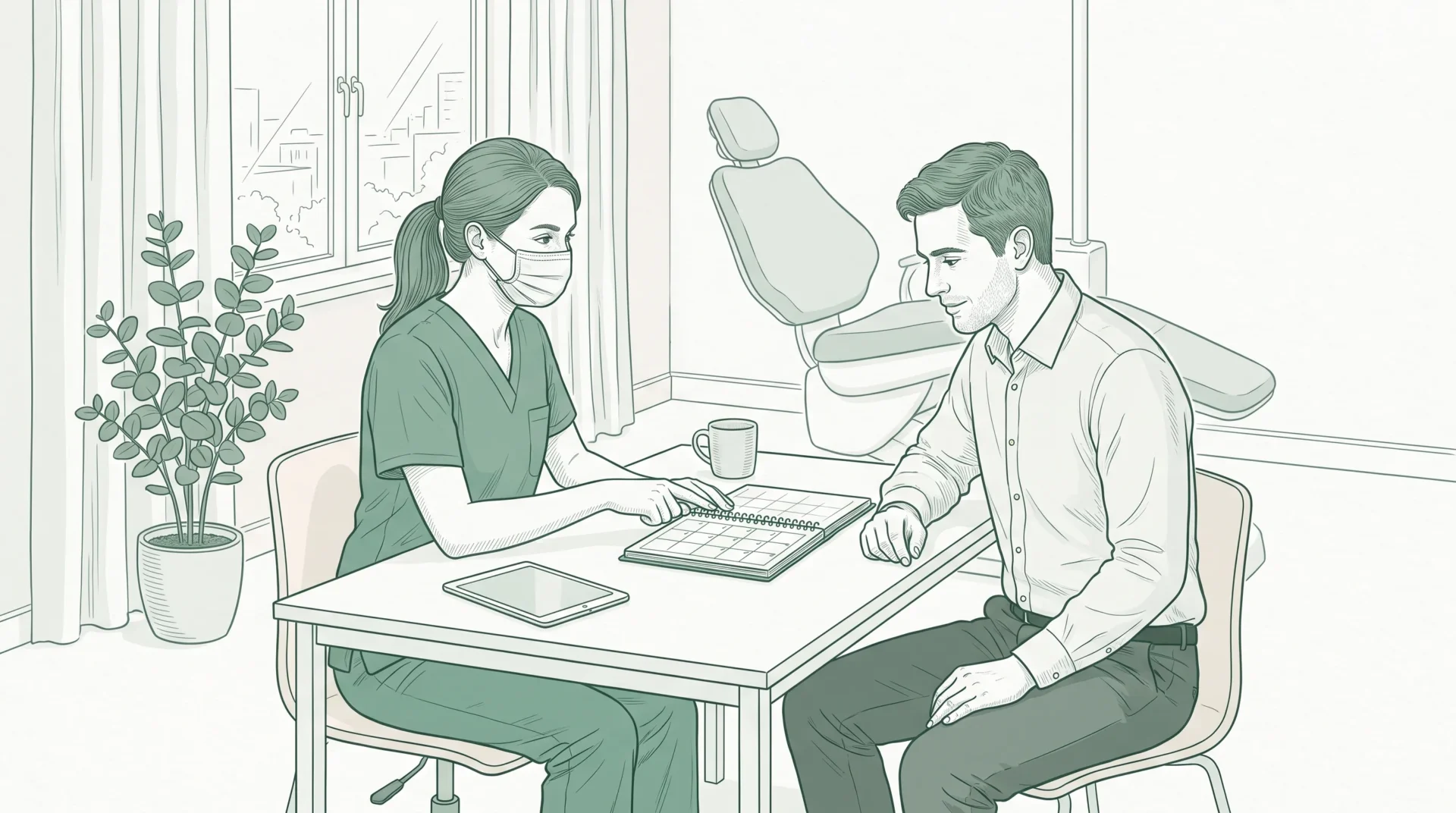
If cost or anxiety is the reason you are waiting
Sometimes the uncertainty is not about the symptom. It is about what an appointment might involve.
An assessment helps establish what is happening and what the options are. It does not mean every possible treatment must happen immediately. Before agreeing to care, you can ask about the findings, recommended priorities, likely costs and the risks of postponing treatment.
If cost is a concern, say so when you call. Ask about the consultation fee, whether imaging may involve an additional charge and what payment arrangements are available. Earlier assessment does not guarantee a simpler or cheaper outcome, but it can give you information before making a decision.
For dental anxiety, explain what worries you: pain, a previous experience, loss of control or embarrassment about the condition of your teeth. You can ask how the team handles explanations, pauses and treatment discussions.
You do not need to feel completely comfortable before you book a dentist appointment. Raising those concerns at the start helps the practice understand what support you need.
Call rather than choose a routine slot when symptoms are changing
Online booking is useful for planned care, but it may not communicate urgency unless the practice reviews your notes promptly. Call if you have swelling, worsening pain, trauma or uncertainty about whether you can safely wait.
A useful description includes:
- Timing: When the problem began and whether it is getting worse or returning.
- Location: Which tooth or area is affected, if you can identify it.
- Impact: Whether you can eat, sleep, swallow and open your mouth normally.
- Other changes: Swelling, fever, injury, bleeding or a broken tooth or restoration.
For example: “My lower back tooth has hurt on and off for a week. Today it hurts when I bite and my cheek looks swollen.” This gives the team more useful information than “I need a check-up”.
If urgent care is recommended, our guide to finding the right clinic for urgent dental care explains what to ask. For a non-urgent visit, the guide to booking a dentist appointment online covers choosing an appointment type and providing helpful notes.
Frequently asked questions
Should I still go if my toothache stops before the appointment? Keep the appointment unless the practice advises otherwise. Explain when the pain occurred, what triggered it and how long it lasted. A symptom-free day does not necessarily mean the cause has resolved.
Can I wait until my next check-up for bleeding gums? Repeated bleeding deserves a call rather than automatically waiting for your next recall. The practice can advise on timing based on how often it happens and whether there is swelling, soreness or tooth looseness. Continue gentle brushing rather than avoiding the area.
Should I book a dentist appointment if nothing hurts? Yes, if your recommended review is due or you have noticed another change. Some decay and gum disease cause little discomfort early on. Your dentist can recommend a review interval based on your oral health and risk factors.
What if I cannot get an urgent appointment at my usual practice? Ask whether they can recommend another service and seek another dental provider if necessary. Do not wait for your preferred clinic if symptoms are escalating. Breathing or swallowing difficulty and other serious warning signs require emergency medical care.
Get advice before deciding to wait longer
East Melbourne Dental Group provides general and emergency dental care, with payment plans available. If a symptom is recurring, changing or affecting daily life, contact East Melbourne Dental Group and describe what is happening so the team can advise on appointment timing. For urgent symptoms, call rather than relying only on an online appointment request.
Disclaimer
The information provided on this website is for general informational and educational purposes only. It is not intended to replace professional dental advice, diagnosis or treatment. Dental needs and treatment outcomes vary between individuals. Always seek advice from a qualified dental practitioner regarding your specific circumstances before making decisions about your oral health or treatment. A consultation and clinical assessment are required to determine which treatment options may be suitable for you. All dental procedures carry potential risks and benefits, which will be discussed with you before treatment.