
22 October 2026 | Cosmetic Dentistry, Teeth Whitening
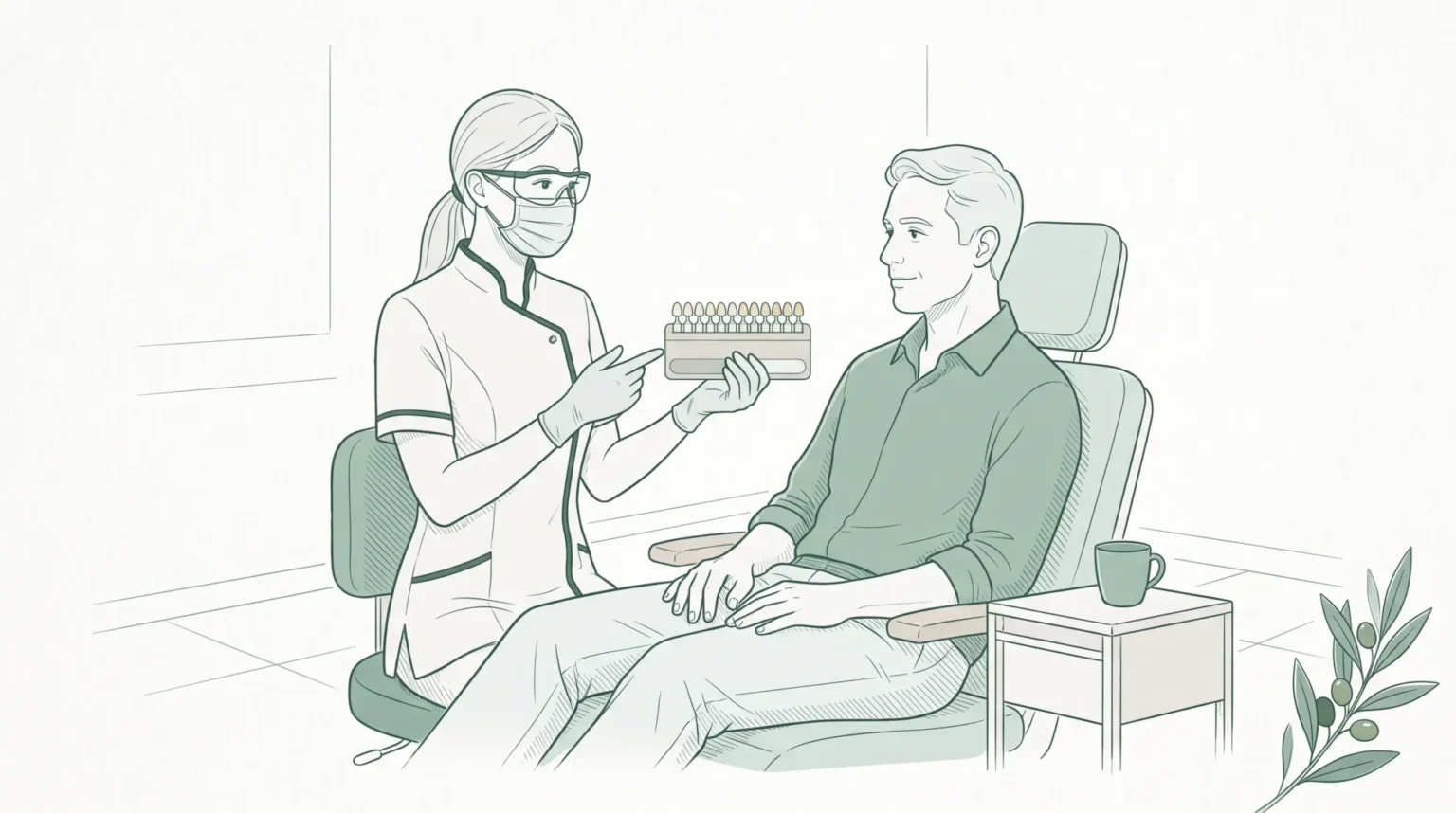
Yes, a dentist can often lighten deep tooth stains, but not every type of discolouration responds equally. If you are searching for a “teeth whitening dentist near me”, the most useful first step is finding out what caused the colour change. Staining within a natural tooth may improve with bleaching, while decay, a dark filling or a discoloured crown needs a different approach.
Whitening changes the colour of natural tooth structure; it does not guarantee that every stain will disappear. Understanding that distinction helps you weigh up the likely improvement before committing to treatment.
What makes a stain “deep”?
Surface stains, called extrinsic stains, collect on the outside of teeth. Coffee, tea and tobacco can contribute to them. Professional cleaning may remove much of this build-up without bleaching the tooth itself.
Intrinsic discolouration sits within the enamel or dentine. Possible causes include ageing, exposure to certain medications while teeth were developing, dental fluorosis and changes following an injury. These causes affect different parts of the tooth, so they do not respond in the same way.
Age-related yellowing is also partly structural. As enamel becomes thinner, the naturally yellower dentine beneath it becomes more visible. Whitening may lighten the underlying colour, but it cannot replace lost enamel.
A stain that looks deep is not necessarily intrinsic. A dark area could instead be decay, an old restoration or a crack that needs assessment.
Can a “teeth whitening dentist near me” lighten intrinsic stains?
Often, yes. Peroxide-based whitening agents penetrate natural tooth structure and break down coloured compounds. This can lighten some internal discolouration without removing the stained enamel or dentine.
However, the cause and distribution of the colour matter more than how dark it looks in a photograph. Two people with similarly coloured teeth may have quite different treatment options.
| Type of discolouration | What whitening may achieve | Main limitation |
|---|---|---|
| General yellowing with age | May lighten the overall colour of natural teeth | Cannot reverse enamel thinning or wear |
| Tetracycline-related staining | May improve some grey, brown or banded discolouration | Can require prolonged treatment and may remain uneven |
| Dental fluorosis | May reduce some colour differences | White opacities, brown marks or surface changes may need another approach |
| A single tooth darkened after injury | Treatment depends on the health of the tooth's pulp | Routine external whitening may not address the underlying problem |
| A dark crown, veneer or filling | Does not predictably lighten the restoration | Restorative assessment may be needed |
The American Dental Association’s overview of whitening explains the distinction between whitening natural teeth and the colour limitations of restorations. An existing crown will not become lighter simply because the surrounding teeth do.
Why one dark tooth needs a different plan
If your search for a “teeth whitening dentist near me” follows one tooth turning grey or brown, arrange an assessment before starting a whitening course. A single dark tooth can have a different cause from general yellowing across the smile.
An injury may affect the pulp, the tissue containing nerves and blood vessels inside the tooth. The dentist may check the tooth’s response to testing and take an X-ray if clinically indicated. Pain is not always present, so a comfortable tooth can still need investigation.
A previously root-treated tooth may sometimes be suitable for internal bleaching, where whitening material is placed inside the tooth by a dentist. This requires checks of the tooth and root filling, an appropriate internal barrier and a discussion of the risks.
Internal bleaching is not a reason to perform root canal treatment on an otherwise healthy tooth. The diagnosis determines whether treatment is needed and which approach makes sense.
When whitening alone may not produce an even colour
Deep staining can involve more than a dark shade. Some teeth also have opaque white areas, pits, worn edges or restorations of different colours. Lightening the surrounding tooth does not necessarily correct these differences.
When speaking with a provider found through a “teeth whitening dentist near me” search, ask whether the concern is mainly colour, enamel structure or an existing restoration. Each calls for a different treatment discussion.
White patches and brown enamel marks
For selected enamel lesions, a dentist may discuss microabrasion or resin infiltration. Microabrasion removes a very small amount of superficial enamel, while resin infiltration can reduce the visibility of certain porous enamel lesions. Neither is suitable for every white or brown mark.
Whitening may form part of a staged plan, but it can also temporarily make white patches more noticeable. The aim is to assess the overall appearance after the teeth have rehydrated and the colour has settled, rather than judge it immediately after treatment.
Stains that remain after a reasonable whitening trial
Composite bonding or veneers may be considered when an acceptable colour cannot be achieved conservatively. These options cover or mask discolouration rather than bleach it away.
That distinction matters because restorations have their own maintenance needs. Veneers may require irreversible tooth preparation, while bonding can stain, chip or need repair. A deep stain does not automatically mean veneers are necessary.
How long should you try whitening before reassessing?
There is no single treatment duration for all intrinsic stains. General yellowing and longstanding medication-related banding should not be expected to follow the same timetable.
Some tetracycline-related discolouration may require months of carefully supervised treatment rather than one appointment. Even then, darker bands may remain visible. A dentist may recommend custom take-home treatment, in-chair whitening or a staged approach according to the findings.
Before starting, agree on a review point. Progress photographs and a recorded starting shade can help distinguish genuine improvement from changes in lighting. Teeth can also look temporarily lighter when dehydrated, making immediate results an unreliable basis for deciding on further treatment.
If progress slows or sensitivity develops, reassessment is more useful than simply applying stronger gel or extending wear time yourself.

Protecting teeth while treating stubborn stains
A stain being difficult to lighten does not make aggressive bleaching a better choice. Increasing concentration, treatment frequency or tray wear time without advice can increase sensitivity and gum irritation.
Before treatment, the dentist should assess concerns that could affect comfort or suitability, such as decay, exposed roots, cracks or leaking fillings. These may need attention first.
Useful safeguards include:
- A defined treatment schedule: Follow the prescribed product, amount and wear time rather than combining whitening products.
- A sensitivity plan: Know when to pause treatment and contact the dentist, particularly if pain is severe, persistent or limited to one tooth.
- A realistic stopping point: Continuing indefinitely to chase a particular shade may add discomfort without delivering a worthwhile change.
If you already experience sensitivity, understanding the professional whitening options for sensitive teeth can help you prepare for that discussion.
Is professional whitening worth the cost for deep stains?
For someone comparing results for “teeth whitening dentist near me”, value depends on the likely improvement, not just the advertised treatment price. A lower-cost course is poor value if the cause of discolouration makes it unlikely to help.
Dentist-supervised treatment provides an opportunity to identify the stain, assess oral health and review the response. It does not guarantee complete removal of deep discolouration.
Ask for an itemised estimate covering any required assessment, cleaning, whitening treatment and follow-up. If visible fillings or crowns may look darker after whitening, discuss whether replacing them is necessary and what that would cost separately. Sound restorations do not automatically need replacement.
The factors affecting teeth whitening prices at the dentist are particularly relevant when treatment may involve more than a straightforward whitening course. Any later cosmetic restoration should be a separate, informed decision.
Frequently asked questions
Can yellow teeth become white again? Many naturally yellow teeth can become lighter with whitening. The final shade depends on the starting colour, enamel and dentine characteristics, the cause of discolouration and treatment tolerance. A specific white shade cannot be guaranteed.
How do I choose a teeth whitening dentist near me for deep stains? Look for an assessment that explains the likely cause, the expected limitations and what happens if whitening does not help enough. Ask how progress will be reviewed and whether any proposed alternative would remove healthy tooth structure.
Will deep stains come back after whitening? Some colour relapse can occur, and new surface stains can develop. Maintenance depends on the original cause, oral hygiene and habits such as smoking or frequent consumption of staining drinks. Touch-ups should follow dental advice rather than a fixed do-it-yourself schedule.
Does stronger whitening gel remove stains that ordinary whitening cannot? Not necessarily. A higher concentration does not solve every type of intrinsic discolouration and may increase sensitivity or irritation. The diagnosis, treatment duration and suitability of the method matter more than strength alone.
Discuss your stain type with an East Melbourne dentist
Before choosing a treatment, ask whether your teeth are likely to lighten, which marks may remain and what a conservative treatment plan would involve.
East Melbourne Dental Group offers teeth whitening and free cosmetic consultations. You can discuss your concerns and ask which assessment is appropriate for your discolouration. Confirm what the consultation includes and whether any examinations, X-rays or treatment would involve additional fees.
A useful plan starts with an explanation of the stain and realistic expectations, not a promise to remove every mark.
Disclaimer
The information provided on this website is for general informational and educational purposes only. It is not intended to replace professional dental advice, diagnosis or treatment. Dental needs and treatment outcomes vary between individuals. Always seek advice from a qualified dental practitioner regarding your specific circumstances before making decisions about your oral health or treatment. A consultation and clinical assessment are required to determine which treatment options may be suitable for you. All dental procedures carry potential risks and benefits, which will be discussed with you before treatment.