
3 August 2026 | General Dentistry, Melbourne Dentist, Preventative Dentistry
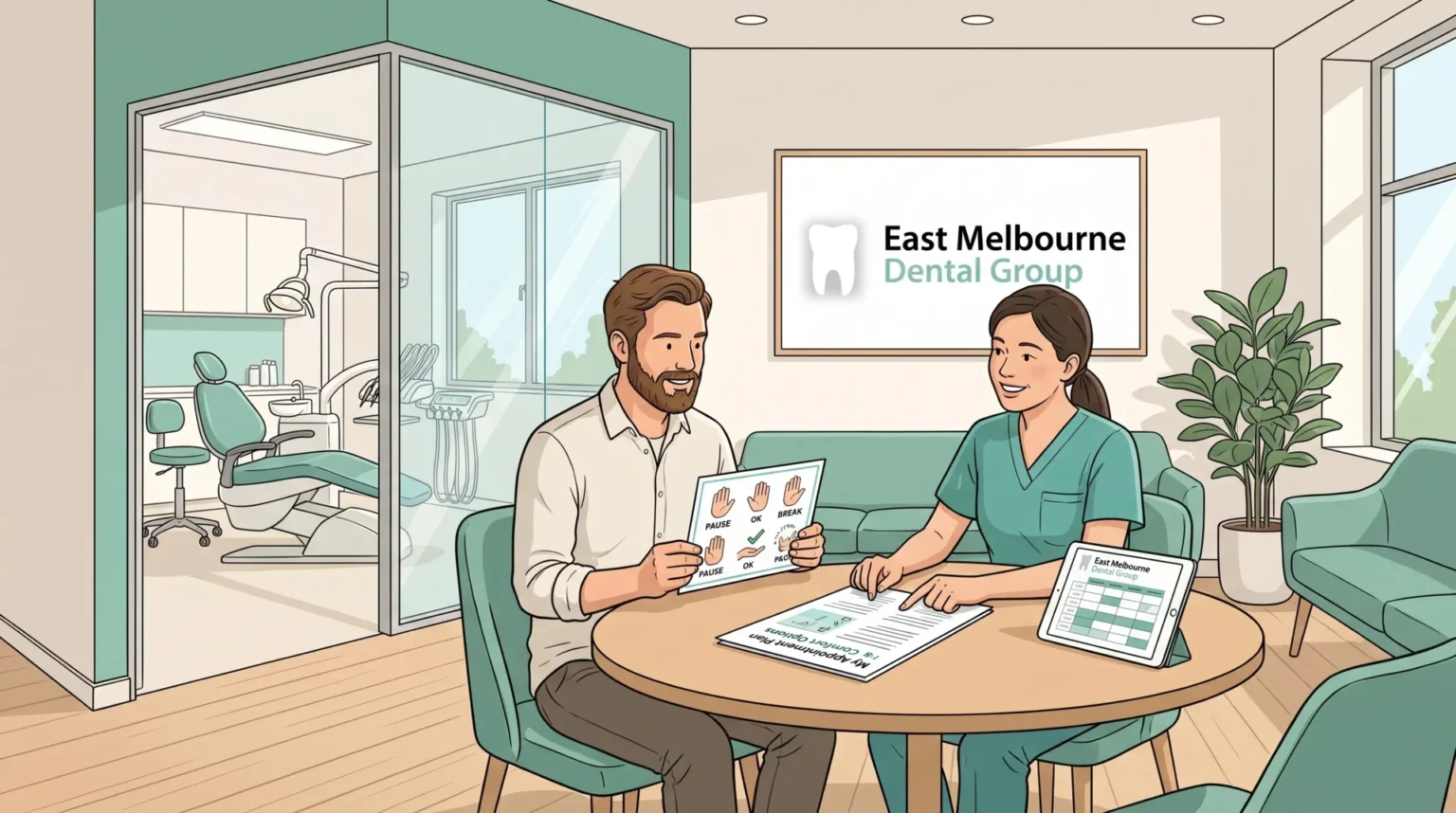
Feeling nervous about seeing a dentist is common, and it does not mean you have neglected your health or done anything wrong. Comfort dentistry is a patient-centred approach that aims to make dental appointments feel more manageable through clear communication, gentle pacing, agreed signals, appropriate numbing where suitable, and treatment planning that respects your needs.
For nervous patients in Melbourne, the main question is often not “what treatment do I need?” but “how can I get through an appointment without feeling overwhelmed?” A good dental visit should begin with that question, because comfort is closely linked to trust, consent and feeling informed before anything happens.
What comfort dentistry means for nervous patients in Melbourne
Comfort dentistry is not a guarantee that treatment will feel the same for everyone. It is best understood as a way of planning and delivering care that considers the person, not just the tooth.
For some patients, comfort means having extra time to ask questions. For others, it means a stop signal, shorter appointments, quieter explanations, avoiding unnecessary detail, or knowing what sensations to expect. A nervous patient may also need reassurance that they can pause, ask for clarification or defer non-urgent treatment while they consider their options.
At East Melbourne Dental Group, patients can discuss concerns before treatment so the dental team can tailor the appointment where clinically appropriate. This may be relevant for general dentistry, children’s dentistry, emergency dental care, cosmetic dentistry, root canal treatment, Invisalign consultations, dental implants or whitening discussions. Suitability for any treatment still depends on an individual assessment.
Why dental appointments can feel difficult
Dental anxiety can have many causes. It may come from a previous uncomfortable appointment, a strong gag reflex, fear of needles, sensitivity, feeling embarrassed, concerns about cost, or simply not knowing what will happen next.
Some people avoid dental care for years because the idea of booking feels stressful. Others attend regularly but feel tense before every appointment. Both situations are valid, and both can usually be discussed without judgement.
Dental worry can also overlap with general anxiety. If your nervousness feels broader than dentistry, Healthdirect’s information about anxiety may be a useful starting point for understanding general symptoms and support options. Some readers also find broader wellbeing resources, such as health, wellness and family lifestyle information, helpful for general self-care, while dental symptoms and treatment choices should be discussed with a registered dental practitioner.
Comfort dentistry options that may help
A comfort-focused appointment usually combines several small steps rather than relying on one single technique. The right approach depends on your oral health, medical history, the type of care needed and your personal preferences.
| Comfort approach | What it may involve | Important note |
|---|---|---|
| A pre-treatment conversation | Discussing concerns, past experiences, triggers and goals before starting | This does not replace a clinical examination, but it can help shape the appointment |
| Clear explanations | The dentist explains what they are checking, why it matters and what options may be available | You can ask for more or less detail depending on what feels useful |
| Agreed stop signal | Raising a hand or using another signal to pause | This can help patients feel more in control during care |
| Appointment pacing | Breaks, shorter visits or staged treatment where appropriate | Some procedures may still require a certain appointment length for safety and quality |
| Local anaesthetic where suitable | Numbing an area before certain procedures | Anaesthetic suitability depends on medical history, treatment type and clinical need |
| Distraction and breathing strategies | Music, slow breathing or focusing techniques | These may help some patients, but they do not replace clinical pain management |
| Sedation discussion | Asking whether sedation options are appropriate or whether referral is needed | Sedation is not suitable for everyone and requires specific assessment, consent and safety planning |
Comfort dentistry should never mean pressuring someone into care they do not understand. It should support informed decision-making, including the option to consider alternatives, ask about risks, or take time before non-urgent treatment.
What your first appointment may involve
If you are nervous, it can be helpful to know what may happen before you arrive. A first appointment for a nervous patient is often about understanding the situation and making a realistic plan, not rushing into complex care.
A typical visit may include:
- A discussion about your concerns: You can let the team know if you are anxious, have had a difficult past experience, dislike certain sounds, have a gag reflex, or need time to process information.
- Medical and dental history: Your dentist may ask about medications, allergies, pregnancy, health conditions and previous dental treatment, because these can affect which options may be appropriate.
- An oral examination: The dentist checks your teeth, gums, bite and soft tissues. X-rays may be recommended if clinically needed to see areas that cannot be assessed visually.
- An explanation of findings: Your dentist should explain what they can see, what it may mean, and whether anything needs attention now or can be monitored.
- A discussion of options: Depending on the findings, options may include preventive care, monitoring, cleaning, restorative treatment, referral, or no immediate treatment.
- A treatment plan and estimate where relevant: If treatment is recommended, you can ask about fees, appointment length, possible risks, alternatives and expected recovery.
If you are looking for dental care for more than one person in your household, you may also find it useful to read about choosing family dental care in East Melbourne, especially if children or anxious adults need extra support.

Comfort dentistry is not one-size-fits-all
A nervous patient attending for a routine check-up may need a different approach from someone with a cracked tooth, dental pain, or concerns about the appearance of their teeth. This is why a clinical assessment matters.
For example, a patient considering whitening may mainly want clear information about sensitivity, suitability and realistic expectations. Someone needing root canal treatment may want to understand the steps involved, how the tooth will be numbed, and what sensations are normal. A patient exploring Invisalign may want time to understand the commitment, limitations and oral hygiene requirements before deciding whether aligners may be suitable.
Modern dental tools and planning processes can also make some parts of care easier to understand. For a broader overview, East Melbourne Dental Group has written about how advanced dentistry makes modern dental care easier, including clearer explanations and prevention-focused care. Technology can support communication and planning, but it does not remove the need for individual assessment or informed consent.
Benefits, limitations and risks to consider
Comfort dentistry may help nervous patients feel more prepared and supported during appointments. It may also make it easier to return for preventive care, especially when previous avoidance has made dental visits feel more difficult.
However, it is important to keep the limitations in mind. Dental treatment experiences vary. Some procedures may still involve pressure, vibration, noise, taste or post-treatment tenderness. Local anaesthetic may be suitable for many procedures, but it may not be appropriate in exactly the same way for every person. Sedation, where considered, has its own requirements and potential risks.
All dental procedures carry potential benefits and risks. Before recommending treatment, a dentist should consider factors such as:
- Your oral health and the condition of the tooth or gums
- Your medical history, allergies and medications
- Your level of anxiety and previous dental experiences
- The urgency of the issue
- Your treatment goals and preferences
- The likely benefits, limitations, costs and alternatives
A balanced dental discussion should include what may happen if treatment is delayed or not undertaken, where that is clinically relevant. It should also allow time for questions, particularly when the treatment is elective or cosmetic.
When nervous patients should seek prompt advice
It is understandable to delay care when you feel anxious, but some symptoms are better assessed sooner rather than later. Seeking advice does not mean you have committed to treatment. It simply helps you understand what may be happening and what options may be appropriate.
Consider contacting a dentist promptly if you have facial swelling, a knocked-out tooth, dental trauma, severe or worsening toothache, signs of infection, bleeding that does not settle, or a broken tooth causing significant discomfort. If you are unsure whether your situation is urgent, East Melbourne Dental Group has information about what may count as a dental emergency in East Melbourne.
If you have swelling affecting breathing, swallowing or your eye area, or you feel seriously unwell, seek urgent medical care.
How to prepare for a comfort-focused dental appointment
A little preparation can make the appointment feel more predictable. You do not need to have everything worked out before you attend, but it may help to write down what matters most to you.
Helpful things to mention include:
- Whether you feel anxious before, during or after appointments
- Any previous dental experiences you found difficult
- Whether you prefer detailed explanations or brief step-by-step updates
- Any concerns about needles, gagging, sounds, smells or lying back
- Current medications, allergies or health conditions
- Whether cost, timing or transport affects your treatment choices
You can also ask about appointment length, whether a support person can attend, and whether there are quieter times of day. Not every request can be accommodated in every situation, especially during urgent care, but sharing information early helps the team plan safely and respectfully.
Choosing a comfort-focused dentist in East Melbourne
When choosing a dentist for anxiety or nervousness, look beyond a single promise or phrase. Comfort-focused care should be visible in how the clinic communicates, explains choices and respects consent.
It may be helpful to look for a clinic that:
- Encourages questions before treatment begins
- Explains fees and treatment options clearly
- Discusses risks, limitations and alternatives
- Avoids pressuring you into cosmetic or elective treatment
- Offers preventive care as well as treatment when needed
- Can support families, children and adults with different comfort needs
- Provides a clear process for emergencies and ongoing care
Be cautious of any dental advertising that promises a specific result, suggests treatment is suitable for everyone, or describes care as risk-free. Ethical dental care should be based on your individual circumstances, not a one-size-fits-all message.
Frequently asked questions
Is comfort dentistry the same as sleep dentistry? No. Comfort dentistry is a broader approach that may include communication, pacing, stop signals and appropriate clinical techniques. Sleep dentistry or sedation refers to specific medication-based options, which require assessment and are not suitable for everyone.
Can I book a dental appointment just to talk about my anxiety? Yes, you can let the clinic know you are nervous when booking. A consultation can help your dentist understand your concerns, assess your oral health and explain what options may be appropriate before treatment is planned.
Will comfort dentistry remove all discomfort? Not necessarily. Comfort-focused care may help reduce stress and make treatment more manageable, but experiences vary. Some dental procedures can still involve pressure, vibration, noise or temporary tenderness afterwards.
What if I feel embarrassed about my teeth? Dentists see a wide range of dental situations. You do not need to apologise for avoiding care or feeling anxious. The purpose of an appointment is to assess your oral health and discuss options, not to judge you.
Can children benefit from a comfort-focused approach? Many children benefit from calm explanations, age-appropriate language and positive early dental experiences. The approach should be tailored to the child’s age, needs and ability to understand what is happening.
Should I delay treatment until I feel less nervous? It depends on the situation. If symptoms are mild or the treatment is elective, you may have time to discuss options and prepare. If you have swelling, trauma or significant pain, earlier assessment is usually advisable so the cause can be identified.
Discuss comfort dentistry with East Melbourne Dental Group
If dental anxiety has made it difficult to book care, a calm conversation can be a practical first step. A dental examination can help determine the cause of any symptoms and which options may be appropriate for your situation.
To discuss comfort dentistry in East Melbourne, you can contact East Melbourne Dental Group or use the clinic’s online booking option. Your dentist can assess your oral health, explain potential benefits and risks, and help you consider treatment options at a pace that supports informed decision-making.
Disclaimer
The information provided on this website is for general informational and educational purposes only. It is not intended to replace professional dental advice, diagnosis or treatment. Dental needs and treatment outcomes vary between individuals. Always seek advice from a qualified dental practitioner regarding your specific circumstances before making decisions about your oral health or treatment. A consultation and clinical assessment are required to determine which treatment options may be suitable for you. All dental procedures carry potential risks and benefits, which will be discussed with you before treatment.