
18 September 2026 | Cosmetic Dentistry, Invisalign, Melbourne Dentist

If you have searched for a top rated cosmetic dentist near me, you are probably weighing up more than a quick polish or a brighter shade. Cosmetic dental work can affect your appearance, bite, confidence, comfort and long-term oral health, so the dentist you choose should be judged on more than convenience or a five-star average.
A worthwhile cosmetic dentist is not simply someone who offers veneers, whitening, aligners or implants. The better question is whether they can help you make a safe, informed decision that suits your mouth, your goals and your budget. In Australia, that also means working within clear professional and advertising standards, explaining risks honestly and avoiding promises that no clinician can guarantee.
Why a top rated cosmetic dentist near me is more than a star rating
Online reviews can be helpful, but they are only one part of the picture. A high rating may tell you that patients found the team polite, appointments ran on time or the clinic felt comfortable. It does not always tell you whether the treatment plan was conservative, whether alternatives were explained or whether the final result remained stable years later.
Look for patterns rather than isolated praise. Reviews that mention clear communication, gentle care, realistic expectations and follow-up support are usually more useful than broad comments such as “great smile makeover”. It is also worth reading recent feedback because a clinic’s systems, team and technology can change over time.
In Australia, health advertising must not mislead patients or create unreasonable expectations. Ahpra’s advertising guidance is a useful reminder that cosmetic dentistry should be presented responsibly, without guarantees or pressure tactics. If you want a deeper way to interpret online feedback, East Melbourne Dental Group’s guide to reading dentist reviews beyond star ratings explains what to notice before you shortlist a clinic.
A top rated cosmetic dentist near me can have strong reviews, but the real value is shown in the consultation room, where your dentist assesses your oral health, listens to what you want and explains what is clinically sensible.
Cosmetic dentistry should start with oral health
Cosmetic treatment is most successful when the foundation is healthy. Before discussing shape, colour or alignment, a dentist should check for decay, gum inflammation, enamel wear, cracks, grinding, bite issues and the stability of existing fillings or crowns. Skipping this step can mean placing cosmetic work over problems that later compromise the result.
This is especially important for treatments such as veneers, crowns and implants, where the planning involves both appearance and function. A tooth that looks slightly short may be affected by wear. A gap might be linked to gum health, tooth position or missing tooth support. A discoloured tooth may need investigation before whitening or covering it.
You can also check that a practitioner is registered through the Ahpra public register. In Australia, “cosmetic dentist” is commonly used to describe a dentist who provides cosmetic dental services, but it is not the same as a separate registered dental specialty. A top rated cosmetic dentist near me should be transparent about their registration, training, experience and the limits of any proposed treatment.
The consultation should connect goals, risks and options
A valuable cosmetic consultation does not begin with a single product. It begins with a conversation about what bothers you, what you like about your current smile, how much change you want and how much maintenance you are prepared for. Some patients want a subtle improvement that still looks like them. Others want a more structured change in tooth shape, colour or alignment.
A top rated cosmetic dentist near me will usually offer more than one pathway when more than one clinically appropriate option exists. For example, minor crowding may be discussed in relation to Invisalign, bonding, enamel shaping or doing nothing, depending on your teeth and goals. Staining may be managed with professional cleaning, whitening, restorative work or a combination of steps.
Common smile goals and possible pathways
| Smile goal | Options a dentist may discuss | What affects suitability |
|---|---|---|
| Brighter tooth colour | Professional whitening, cleaning, replacement of old restorations | Type of staining, enamel condition, existing fillings or crowns |
| Straighter appearance | Invisalign, orthodontic referral, bonding or veneers in selected cases | Bite, crowding, gum health and treatment timeframe |
| Improved tooth shape | Composite bonding, veneers, crowns or enamel reshaping | Tooth structure, wear patterns and long-term strength |
| Closing small gaps | Invisalign, bonding or veneers | Gap size, tooth proportions and gum position |
| Replacing missing teeth | Dental implants, bridges or dentures | Bone volume, medical history, gum health and budget |
If you are unsure which treatment matches your concern, the clinic’s guide to cosmetic dental services and smile goals gives a helpful overview without assuming that one solution fits every patient.
Planning quality is where good cosmetic dentistry becomes visible
Cosmetic dentistry is part art, part clinical planning. The dentist needs to consider tooth proportions, smile line, gum display, facial balance, speech, bite forces and how the proposed result will age. A beautiful result that chips, feels bulky or affects chewing is not a good result.
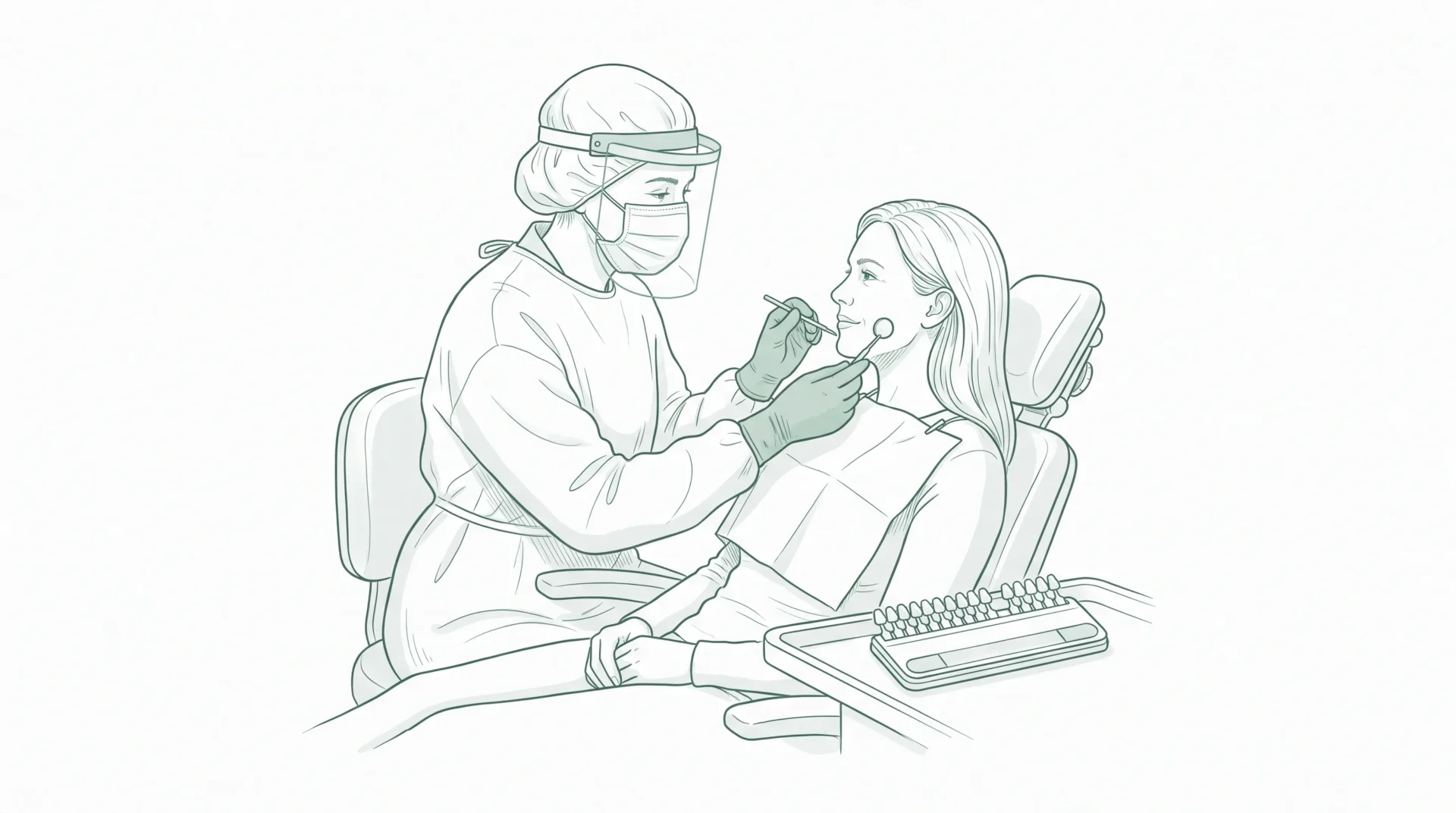
Ask how your dentist plans treatment before irreversible steps are taken. Depending on the case, this may involve photographs, X-rays, digital scans, shade assessment, bite analysis, diagnostic models or a mock-up. Not every treatment needs every planning tool, but your dentist should be able to explain why each step is or is not needed.
Good planning also means staging care sensibly. Whitening might be done before bonding so the new resin matches the final shade. Gum treatment may need to come before veneers. Aligners may reduce the need for more invasive tooth reshaping. These decisions can make treatment more conservative and more predictable.
Clear communication and consent are non-negotiable
Cosmetic treatment is elective in many cases, so you should never feel rushed into it. Your dentist should explain the likely benefits, limitations, risks, maintenance needs and alternatives, including the option of no treatment. This is part of valid informed consent, not an optional courtesy.
Cost discussions should also be clear. A treatment plan should outline what is included, what may attract additional fees and what could change if unexpected clinical findings arise. If payment plans are available, they should be explained in practical terms so you understand the financial commitment before starting.
A top rated cosmetic dentist near me should be comfortable slowing the process down if you need time to decide. Pressure to book immediately, vague pricing or promises of a perfect outcome should make you cautious. Cosmetic dentistry involves biology, materials and individual healing responses, so responsible dentists talk in terms of suitable options and realistic expectations rather than guaranteed results.
Technical judgement matters more than a cosmetic label
Many cosmetic procedures look simple from the outside. Whitening looks like a shade change. Veneers look like thin shells. Invisalign looks like clear plastic. Dental implants look like replacement teeth. Each treatment has technical requirements that affect comfort, function and longevity.
With veneers, the dentist must balance aesthetics with tooth preservation, bite forces, gum margins and material selection. With whitening, they need to identify whether stains are likely to respond and whether sensitivity risk needs to be managed. With Invisalign, the plan should account for gum health, tooth movement limits and bite stability. With implants, planning must consider bone, soft tissue, medical history and restorative design.
A top rated cosmetic dentist near me is not defined by offering the longest menu of treatments. They are worth choosing when they can recommend the right level of care, including saying no to treatment that is unlikely to serve you well. Sometimes the most skilled cosmetic decision is the most conservative one.
Comfort, continuity and aftercare shape the experience
Cosmetic dentistry often happens over several appointments. Comfort matters because you need to feel able to ask questions, discuss concerns and return for reviews. A calm environment, clear explanations and gentle clinical technique can make the process easier, especially if you feel anxious about dental treatment.
Continuity also matters. A dentist who understands your oral history can plan cosmetic work around existing restorations, grinding risk, gum health and future maintenance. Aftercare may involve retainers, nightguards, hygiene visits, reviews or guidance on caring for restorations. These steps are not glamorous, but they help protect your investment.
A top rated cosmetic dentist near me also understands that cosmetic care is not isolated from general dentistry. Your smile needs to function comfortably when you eat, speak and clean your teeth. That is why the best experience often comes from a clinic that can combine cosmetic planning with ongoing preventive and restorative care.
Red flags that a cosmetic dentist may not be worth choosing
Some warning signs are easy to overlook when you are focused on the final appearance. Be cautious if a clinic appears to prioritise sales over diagnosis, recommends irreversible treatment without explaining alternatives or relies heavily on dramatic claims.
Other red flags include very vague fees, little discussion of maintenance, no oral health assessment before cosmetic planning, reluctance to discuss risks or pressure to decide on the day. It is also sensible to be wary of any advertising that suggests a specific result is guaranteed, since individual clinical outcomes vary.
If you are comparing local options, East Melbourne Dental Group has also published a practical guide on choosing a cosmetic dentist in East Melbourne that can help you ask more useful questions before booking.
Frequently Asked Questions
How do I know if a top rated cosmetic dentist near me is suitable for my case? Start with registration, consultation quality and whether the dentist assesses your oral health before recommending treatment. Suitability depends on your teeth, gums, bite, goals, budget and willingness to maintain the result.
Are cosmetic dental treatments painful? Many cosmetic treatments are designed to be comfortable, but the experience depends on the procedure and your individual sensitivity. Your dentist should explain what to expect, whether anaesthetic is needed and how discomfort can be managed.
Is the most expensive cosmetic dentist always the best? No. Cost can reflect materials, time, planning and clinical complexity, but a higher fee alone does not prove quality. Look for clear diagnosis, realistic advice, transparent pricing and a treatment plan that makes sense for your mouth.
Should I choose veneers, whitening or Invisalign first? The right order depends on your goals and oral health. Whitening is sometimes completed before bonding or veneers, and aligners may be recommended before restorative work if tooth position affects the final result.
Considering cosmetic dentistry in East Melbourne?
If you are exploring whitening, Invisalign, veneers, crowns, implants or another cosmetic option, East Melbourne Dental Group offers cosmetic and general dentistry in a local clinical setting. The practice provides free cosmetic consultations, flexible payment plans and a focus on helping patients understand their options before committing to treatment.
You can contact East Melbourne Dental Group to discuss your goals and find out what may be suitable for your smile.
Disclaimer
The information provided on this website is for general informational and educational purposes only. It is not intended to replace professional dental advice, diagnosis or treatment. Dental needs and treatment outcomes vary between individuals. Always seek advice from a qualified dental practitioner regarding your specific circumstances before making decisions about your oral health or treatment. A consultation and clinical assessment are required to determine which treatment options may be suitable for you. All dental procedures carry potential risks and benefits, which will be discussed with you before treatment.