
7 October 2026 | Cosmetic Dentistry, Oral Health

If you are searching for “dentist cosmetic dentistry”, you may be picturing whiter, straighter or more even teeth. Before recommending a change, a dentist also needs to understand how those teeth meet when you bite and how they move against one another when you chew.
A veneer that changes a tooth’s length, bonding that closes a gap or an aligner that moves a tooth can affect those contacts. Planning around your bite helps the dentist assess whether a proposed cosmetic change is practical, how much tooth structure needs to be preserved and what maintenance you may need.
The aim is not to give everyone an identical bite. It is to plan changes that suit your teeth, oral health and existing function, with a clear explanation of the limitations.
What your bite tells the dentist
Your bite, also called your occlusion, describes the relationship between your upper and lower teeth. An assessment considers both the position where they meet and the contacts that occur as your jaw moves.
Teeth do not need to look perfectly symmetrical to function comfortably. Equally, a smile that looks even in a photograph may have worn edges, limited room for a restoration or a contact that needs further assessment.
How your teeth meet when you close
When a dentist plans cosmetic dentistry, they check where the teeth contact and whether the proposed treatment would change those contacts. They may use thin marking paper or other materials to identify where teeth touch. The size or darkness of a paper mark alone does not reliably measure bite force.
The assessment may also consider missing teeth, existing fillings and whether a tooth has moved into a space. These details help establish how much room is available for bonding, a veneer or a crown.
For example, making an upper front tooth longer may bring its edge closer to a lower tooth. Whether that is suitable depends on the overlap between the teeth and what happens during movement, not simply on the preferred appearance.
How your teeth interact during movement
The dentist may ask you to move your jaw forwards and sideways. This helps identify which teeth contact during those movements and whether a planned restoration could interfere with them.
They also look for chipped edges, cracks, wear patterns and signs of erosion. Wear is not automatically proof of grinding: acids, habits and other factors can contribute, so the cause needs assessment.
Tell the dentist about clenching, morning jaw fatigue, tooth sensitivity or a previous restoration that repeatedly chipped. Also mention jaw locking, limited opening or painful clicking.
Before recommending cosmetic dentistry, a dentist should distinguish a cosmetic concern from a problem that needs separate investigation. Jaw joint pain, for example, is not something veneers should be promised to cure.
How bite findings influence treatment choices
Different treatments affect the bite in different ways. Whitening changes tooth colour without intentionally changing tooth shape or position. Bonding, veneers and crowns can alter contours, while orthodontic treatment moves teeth.
The following examples show why a bite assessment can change the recommendation.
| Treatment | Bite-related consideration | Possible planning response |
|---|---|---|
| Teeth whitening | It does not intentionally change tooth contacts | Assess oral health and sensitivity rather than reshaping the bite |
| Composite bonding | Added material can create a new contact or reduce available space | Check thickness, position and contacts before completing the restoration |
| Veneers | Changes to length or contours may affect contact with opposing teeth | Assess overlap, available space and grinding-related risks |
| Crowns | The biting surface must work with neighbouring and opposing teeth | Plan contacts alongside the tooth’s structural needs |
| Clear aligners | Moving teeth changes their relationships over time | Assess whether tooth movement should precede restorative treatment |
A dentist may recommend cosmetic dentistry in stages rather than treating every concern at once. Alignment might create room for a later restoration, while whitening may help establish a shade before visible restorations are made.
Our guide to where whitening fits in a cosmetic dentistry plan explains why that sequence matters. Whitening does not change the colour of existing veneers, crowns or fillings.
How a bite-aware treatment plan is built
Establish oral health and a useful baseline
Planning starts with the health of the teeth, gums and supporting tissues. Decay, gum inflammation, unstable restorations or unexplained pain may need attention before elective cosmetic treatment.
Depending on the proposed treatment, records may include photographs, impressions or digital scans and a record of how the teeth meet. X-rays are taken when clinically indicated, not simply because someone is considering a cosmetic change.
The level of assessment should match the treatment’s complexity. A small repair to one tooth and a plan that changes several biting surfaces do not necessarily require the same records.
Check space and preserve tooth structure
Available space is a practical limit on cosmetic changes. Adding material where opposing teeth already meet closely may create an unwanted contact. Removing tooth structure to make room has its own biological costs.
For cosmetic dentistry, your dentist should explain whether the desired shape can be achieved additively, whether some preparation is needed or whether orthodontic movement offers a suitable alternative. Crowns generally require more tooth preparation than veneers and should not be treated as the default option for otherwise healthy teeth.
Consider a hypothetical patient who wants longer upper front teeth after years of edge wear. The dentist would first assess why the wear occurred, whether the lower teeth would contact the proposed longer edges and whether enough space exists. Options might include limited bonding, tooth movement before restoration or accepting a smaller change.
The recommendation depends on the examination. A photograph alone cannot establish which option is appropriate.
Preview the proposal and check its limits
For some treatments, a diagnostic design or temporary mock-up can help assess proposed tooth shapes. Depending on the method, it may let the dentist and patient review appearance, speech and aspects of tooth contact before definitive work begins.
A preview is not a guarantee of the final result or long-term durability. Temporary materials behave differently from final restorations, and a visual simulation cannot reproduce every chewing force.
When planning cosmetic dentistry, a dentist uses these tools alongside clinical findings, rather than treating a pleasing preview as proof that the bite will work. You can explore the broader design process in our guide to planning a natural-looking dental makeover.
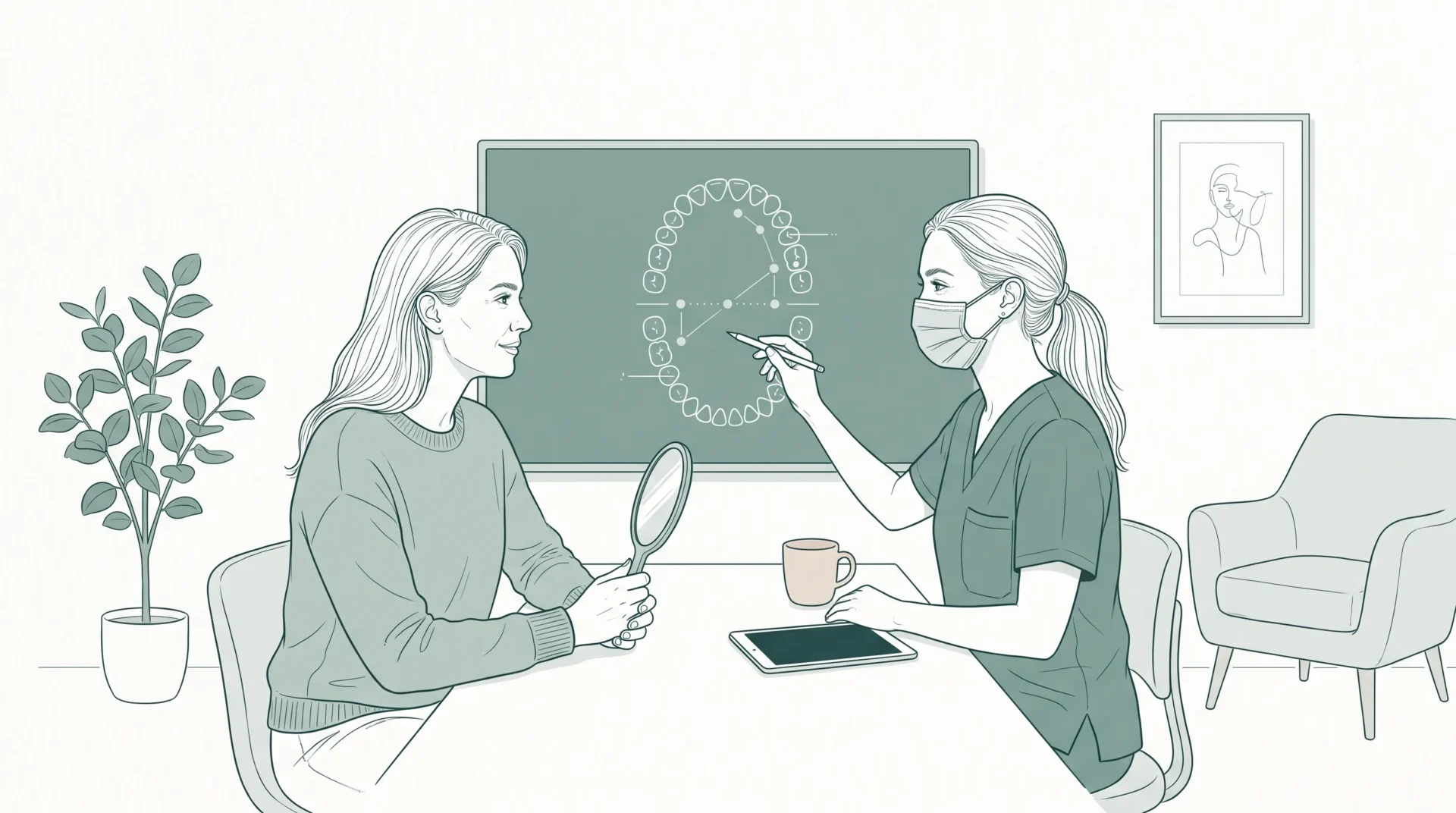
What changes if you clench or grind?
Clenching and grinding can place substantial loads on teeth and restorations. They may influence the choice of material, the extent of treatment and the discussion about chipping or repair. They do not automatically rule out cosmetic care.
The NHS guidance on teeth grinding describes possible effects including tooth damage, sensitivity and jaw pain. Tell your dentist if you have noticed these symptoms or have previously used a mouthguard.
An individually prescribed occlusal splint may be considered to protect teeth and restorations. It does not guarantee that grinding will stop or that a restoration will never break. Its fit may also need review after teeth are moved or restored.
Changing the bite is not a routine cure for jaw pain. The US National Institute of Dental and Craniofacial Research guidance on temporomandibular disorders advises avoiding treatments that permanently alter the teeth or bite solely to treat these disorders without an appropriate evidence-based rationale.
Why the final bite check and follow-up matter
The plan needs to be checked in the mouth after treatment. Following bonding, veneers or crowns, the dentist assesses contacts when you close and during relevant jaw movements. They may also check comfort, speech and the surrounding gums.
Your dentist should review cosmetic dentistry after placement because a restoration that looks suitable still needs to function acceptably. Numbness can make your own assessment of the bite less reliable during an appointment, so report any persistent feeling that one tooth touches first once sensation returns.
Ongoing pain on biting, repeated chipping or a bite that feels persistently uneven warrants review rather than being dismissed as something to get used to.
Maintenance also matters. Cleaning, dental reviews and any recommended protective appliance form part of the longer-term plan. Repairs or replacement may eventually be needed, and the timing varies with the material, oral health and the loads placed on the restoration.
Questions to ask after a “dentist cosmetic dentistry” search
A useful consultation should connect the cosmetic recommendation to what the dentist found during the examination. Ask questions that make that reasoning clear:
- Will this change where my teeth contact? Ask about both closing together and moving the jaw.
- Is there enough space for the proposed shape? Discuss whether bonding alone is suitable or whether another step is needed first.
- How much tooth structure would be removed? Understand what is irreversible and whether less invasive alternatives exist.
- Does wear or grinding change my risks? Ask about protection, maintenance and possible repairs.
- What are the alternatives, including no treatment? Request an explanation of the benefits, limitations, costs and likely sequence.
You do not need to know the technical vocabulary. The dentist should be able to explain why a treatment suits your particular teeth and where uncertainty remains.
Frequently asked questions
Do I need a bite assessment if I only want whitening? An oral health assessment is still appropriate, but whitening does not intentionally change tooth shape or contacts. The extent of any bite investigation depends on your symptoms and clinical findings.
Can veneers change my bite? They can alter contacts if they change tooth length or contours where opposing teeth meet. The amount and location of that change need assessment before treatment and checking after placement.
Will I need Invisalign before veneers or bonding? Not necessarily. Tooth movement may be worth discussing if position limits restorative space or would otherwise require substantial tooth preparation. Suitability depends on your oral health and treatment goals.
Does a comfortable bite mean there are no risks? No. A dentist assessing cosmetic dentistry also looks for wear, cracks and other findings that may be present without pain. Comfort is useful information, but it is only one part of the assessment.
Can cosmetic dental treatment fix jaw clicking? It should not be presented as a reliable treatment for jaw clicking or jaw joint disorders. Painful clicking, locking or limited opening needs assessment, and management may be separate from cosmetic care.
Discuss your smile goals alongside your bite
East Melbourne Dental Group offers free cosmetic consultations. You can book a cosmetic consultation with the team to discuss the changes you are considering and the next steps for assessment.
Bring details of any grinding, tooth wear, jaw discomfort or previous restoration problems. These can help guide the discussion towards a plan that considers both appearance and function.
Disclaimer
The information provided on this website is for general informational and educational purposes only. It is not intended to replace professional dental advice, diagnosis or treatment. Dental needs and treatment outcomes vary between individuals. Always seek advice from a qualified dental practitioner regarding your specific circumstances before making decisions about your oral health or treatment. A consultation and clinical assessment are required to determine which treatment options may be suitable for you. All dental procedures carry potential risks and benefits, which will be discussed with you before treatment.